


THE BEGINNING OF A NEW TYPE OF COLLABORATION
Since the World Health Organization (WHO) Clean Care is Safer Care program began in 2005, over 130 WHO member states and autonomous areas have pledged their support to prevent healthcare-associated infections (HAI). Over 17,000 healthcare facilities have committed to improving hand hygiene as part of this, representing well over 10 million healthcare workers and over 4 million patient beds, an unprecedented achievement in patient safety. This widely acclaimed program has led to saving lots of lives across the world each year. Healthcare workers, patients, and the general public now understand the benefits of a clean hands culture and that ‘Clean Hands Save Lives’. Prof. Didier Pittet, Clean Hospitals Chair, is the External Program Lead for the WHO First Global Patient Safety Challenge: Clean Care is Safer Care.
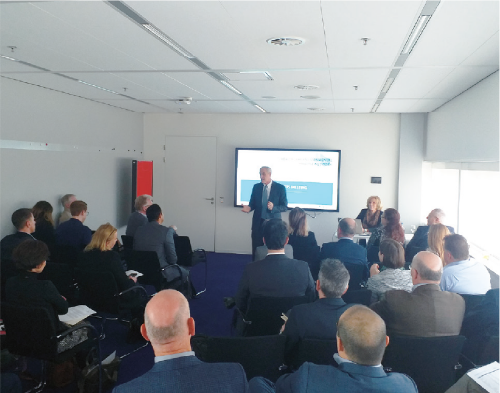
Clean Hospitals was born from a lack of strong guidance for environmental hygiene and cleaning in the healthcare sector. The lack of awareness and the need for the whole sector to improve healthcare environmental hygiene were proven by the expression of all stakeholders in this market. Prof. Pittet was joined by international infection prevention and control specialists and global stakeholders in creating the global network that was born during Interclean 2018, and officially launched in September 2019.
Two white papers have been written at this stage regarding the objectives of the initiative: “Keeping Hospitals Clean and Safe Without Breaking the Bank; Summary of the Healthcare Cleaning Forum 2018”, published by BioMedCentral (Dec 2019), and “Clean Hospitals: Transforming Patient Safety from an Idea to an International Collaborative Movement.”, published by the European Cleaning Journal (Sept 2019).
PURPOSE
We aim to use the knowledge and momentum generated by our research and working groups to raise industry standards and increase the visibility of the hospital environment in patient care. The purpose of the initiative is to increase patient safety and bring international attention to the need for an increased focus on healthcare environmental hygiene. Although the hospital environment tends to be one of the most understudied and underfunded areas in healthcare, there is enough literature in the field to prove that a well-maintained patient environment is crucial for preventing the spread of healthcare-associated infections and antimicrobial resistance.
Beyond patients, hospital environmental hygiene also has a direct impact on the lives of the people working in the hospitals, as well as a broader impact on communities and the environment. These improvements will benefit public health by lowering rates of healthcare-associated infections, reducing antimicrobial resistance, and protecting hospital staff as well as the wider environment.
WHY IS IT UNIQUE?
Clean Hospitals members and collaborative partners are a unique blend composed of academia, governmental bodies, key opinion leaders, associations, organizations, hospitals, service providers, and industry. All our stakeholders work hand-in-hand to improve healthcare environmental hygiene globally. We seek to harness the collective strengths in order to collaborate across disciplines and interest groups.

FIELD OF ACTIVITIES
The Clean Hospitals team is increasing the scientific, evidence-based literature in the field (via publications in peer-reviewed journals, research projects, etc.) and addressing common challenges and misconceptions. We are developing and organizing training and certification programs for use in different geographical regions. Clean Hospitals is supporting information-sharing and communication activities that have an impact on the healthcare environmental hygiene field and improve infrastructure for hospital cleaning.
RESEARCH ACTIVITIES
- Systematic Review in Healthcare Environmental Hygiene
A review of the effect that interventions in the hospital environment have on healthcare-associated infections. We are currently defining the search terms, as well as the inclusion and exclusion criteria. This project will ultimately raise awareness of hospitals and governmental bodies.
- Cost and Value in Healthcare Environmental Hygiene
An analysis of the cost and value of environmental hygiene in hospitals. This is meant to sensitize hospitals and governing bodies to the substantial and increasing cost of healthcare-associated infection and antimicrobial resistance. It is aimed at quantifying the effectiveness of environmental hygiene interventions in reducing healthcare-associated infections and assessing various models for testing the cost-effectiveness of environmental hygiene in hospitals. The goal of this project is to ensure that the value of environmental hygiene is recognized by the relevant stakeholders.
EDUCATION AND TRAINING
The development of a core curriculum for training and/or certification of hospital environmental hygiene personnel is one of the projects of the Clean Hospitals Education Committee. It will be designed using an implementation science-centred approach that can be adapted across cultural and geographical areas and resource levels. The team is currently working on collecting existing models, which will be analysed and discussed with an international group of experts.
The creation of teaching and training modules in key areas of hospital environmental hygiene is currently part of our ongoing projects. Areas covered will include surfaces, hand hygiene, waste management, air, information technology, digitalization, and implementation science. Subjects will be broken down into modules across three levels, from beginner to advanced. Organizations can choose which subjects and levels they would like to have training in.
WHY DO WE NEED CLEAN HOSPITALS?
The world has changed...
As we wake up each day, we are acutely aware that the world has changed. While the world goes into lockdown, governments and health authorities encourage social distancing, hand washing or sanitizing using alcohol rubs, the wearing of personal protection masks, adequate sleep, avoidance of anyone with symptoms, and cleaning and disinfection of touch points. All these measures are encouraged worldwide to reduce the chance of picking up COVID-19 and potentially spreading it. In case of a lockdown, healthcare workers are encouraged to go into battle on the frontlines. They are being sent into hospitals and buildings that we know have the virus in their patients, on their surfaces, in its air, and even in other staff who do not yet show symptoms.
“While we distance ourselves from the virus, they are getting closer to it.”
“While we rest eight hours a night, many of them are lucky to get four hours.”
Doctors, nurses, paramedics, physiotherapists, radiographers, medical students, cleaning staff, and even non-clinical staff like receptionists, administrative workers, maintenance staff, engineers, and kitchen staff working throughout the building are all connected to healthcare workers on the front line. The whole healthcare sector needs more supply of cleaning products and training against infections, and both are very limited or simply not available.
WHY YOU SHOULD JOIN CLEAN HOSPITALS?
In this high-pressure situation, our hospital network is at a boiling point, and what`s on the inside is now coming out and being noticed. Many individuals and teams of healthcare workers are being praised for their heroic actions: teams of cleaners are being clapped at the end of their shift, and the general public is praising how our healthcare workers are putting their lives and their families’ lives in danger. COVID-19 has already shown us that viruses spread when cases are concentrated in cruise ships, hospitals, and aged-care facilities, and that cross-contamination not only occurs through patient-to-patient contact but also through touching of infected surfaces within a facility and then touching the face. Correctly cleaned healthcare facilities are an essential need for our healthcare workers to survive and be able to save lives. They spend more time at work than at home, and if the hospital they work in is subject to transmitting infections, then there are chances that they will get infected eventually; it’s just a matter of time.
BECOME A PIVOTAL PLAYER
Last year, Clean Hospitals was launched, and the objective was to change the culture in healthcare environmental hygiene. There is much to be done to ensure our hospitals are clean and safe for our healthcare workers, their families, and patients. Together we can and will make a difference. Hospitals, industries, governmental bodies, academics, associations, providers, subcontractors, and all organizations involved in the cleaning and healthcare environmental hygiene sector are welcome to join Clean Hospitals.
Contact the Clean Hospitals team
-
Publication Date:October 11, 2021
-
Category:Environmental Management
HosCom International 2021
