- Magazine Volume:
2025 Vol. 1
- Article number:
3
- Content Type:
World Information
- Category:
IPC
- Facility:
Acute Care Hospital
- Field to link to full PDF field:
HosCom_International_2025_vol1.pdf
- References:
- Chie Shibuya. INFECTION CONTROL 2018. Summer special edition: Environmental improvement ICT manual. MEDICUS SHUPPAN, Publishers Co., Ltd. Osaka. 2028 [Translated] 渋谷智恵編. INFECTION CONTROL 2018年夏季増刊環境整備ICTマニュアル.大阪. 2018.
- Nozomi Ichie. Bathroom & shower room. INFECTION CONTROL 2020: 29(12): 35-9. [Translated] 市江希. 浴室&シャワー室. INFECTION CONTROL 2020: 29(12): 35-9.
- Bureau of Social Welfare, Tokyo Metropolitan Government. A self-management manual of environmental hygiene for managers of social welfare facilities. February, 2005. https://www.hokeniryo.metro.tokyo.lg.jp/kankyo/eisei/yomimono/shakaifukushishisetu/shakaifukushishisetu-manyuaru.html (As of April 12, 2024) [Translated] 東京福祉保健局. 社会福祉施設管理者のための環境衛生設備自主管理マニュアル. 2005年2月. (2024月4月12日現在)
- Ministry of Health, Labour and Welfare. Guideline to Hygiene Management in Bathing Facilities. May, 2022. https://www.mhlw.go.jp/content/11130500/000961757.pdf (As of April 15, 2024) [Translated] 厚生労働省.浴場施設の衛生管理の取引き.2022年5月 (2024年4月15日現在)
- Safety and Environmental Health Bureau. Ministry of Health, Labour and Welfare. Guidelines for hygiene management in public baths. Notice regarding raw food ingredients. 1210. Volume 1. December, 2020. https://www.mhlw.go.jp/content/000704519.pdf (As of April 15,.2024) 厚生省生活衛生局長公衆浴場における衛生等管理要領等について生食発1210第1号.2020年12月. (2024年4月15日現在)
- Health and Welfare Bureau for the Elderly. Ministry of Health, Labour and Welfare. Infection control guidelines for nursing care facilities. Second edition. March, 2021. https://www.mhlw.go.jp/content/12300000/001048000.pdf (As of April 15, 2024) [Translated] 厚生労働省老健局.介護現場における感染対策の取引き第2版. 2021年3月. (2024年4月15日現在)
- Tomohiro Inaba. Biofilm and Its Visualization. KAGAKU TO SEIBUTSU. 2014; 52 (9): 594-601. [Translated] 稲葉知大,他.集団微生物学の進めバイオフィルムとその解析技術.化学と生物 2014; 52 (9): 594-601.
- Shinya Sugimoto. Understanding and controlling the mechanism of biofilm formation. 2020; 98 (6). [Translation] 杉本慎也.バイオフィルムの形成メカニズムの理解と制御.生物工学2020;98 (6).
- Toorisaka E. Analysis and prevention of biofilm formation. Bull Soc Sea Water Sci 2022; 76: 163-69.
- Furuhata K. Let's learn about biofilms-evaluation of legionella biofilm-. J environ biotechnol 2022; 22(1): 23-32.
- Yano T, et al. Analysis and regulation of biofilms in actual environments. J environ biotechnol 2015; 14 (2): 125-29.
- Ikeda T, et al. Prevention of biofilm formation based on quorum sensing inhabitation. J environ biotechnol 2010; 10 (1): 15-18.
Bathrooms at healthcare and nursing facilities are used by many people. Therefore, it tends to be moist for long periods of time, making it an environment conducive to the proliferation of gram-negative bacteria and mold1,2. Furthermore, dead skin...
- Magazine Volume:
2025 Vol. 1
- Article number:
1
- Content Type:
World Information
- Category:
Environmental Management
- Facility:
Acute Care Hospital
- Field to link to full PDF field:
HosCom_International_2025_vol1.pdf
- Authors :
Elena Kraft1, Janine Kunzmann1, Mathias Kunzmann1, Jorg Steinmann1, Florian H.H. Brill2
- Institute of Clinical Hygiene, Medical Microbiology and Clinical lnfectiology, Paracelsus Medical University Klinikum Nuremberg Prof.-Ernst-Nathan-Str. 1 90419 Nuremberg, Germany
- Dr. Brill+ Partner GmbH Institute for Hygiene and Microbiology Stiegstuck 34 22339 Hamburg, Germany, www.brillinstitutes.com, florian.b@brillhygiene.com
- References:
- Zacher B, Haller S, Willrich N, et al. Application of a new methodology and R package reveals a high burden of healthcare-associated infections (HAI) in Germany compared to the average in the European Union/European Economic Area, 2011 to 2012 p. 28. Eurosurveillence 2019;24(46). doi.org/10.2807/1560-7917.ES.2019.24.46.1900135
- Downes A, Blunt T. The influence of light upon the development of bacteria. Nature Publishing Group 1877. doi.org/10.1038/016218a0
- Kraft E, Kunzmann J, Kunzmann, Steinmann J, Brill FHH. Efficacy and benefits of UV disinfection methods in hospitals - implications for hospital hygiene. aseptica 2022;28(2). Hospitals & Hygiene.
- Wacker A, Dellweg H, Weinblum D. Radiation chemical modification of bacterial deoxyribonucleic acid in vivo. The Science of Nature 1960; Vol. 47 (Issue 20), p. 477. doi.org/10.1007/BF00638304
- Damonti L, Steiger W, Senn L, et al. UV decontamination in healthcare facilities. Swissnoso National Center for Infection Control. Swissnoso Bulletin, 2021 / 01.
- Masjoudi M, Mohseni M, Bolton JR, Sensitivity of Bacteria, Protozoa, Viruses, and Other Microorganisms to Ultraviolet Radiation, Journal of Research of the National Institute of Standards and Technology 2021; Volume 126, Article No. 126021. doi.org/10.6028/jres.126.021
- Publication of the List of Treatment Substances and Disinfection Procedures pursuant to Section 11 of the Drinking Water Ordinance - 23rd Amendment - (as of December 2021), German Federal Environment Agency.
- Schmalwieser AW, Cabaj A, Hirschmann G, et al., Ten-year monitoring of an ultraviolet disinfection plant for drinking water, Journal of Environmental Engineering and Science 2015; Volume 10 Issue JS2, pp. 34-39, ISSN 1496-2551. doi.org/10.1680/jees.14.00014
- Climate change and the risk of UV-related illness, Federal Office for Radiation Protection; https://www.bfs.de/DE/themen/opt/uv/klimawandel-uv/klima-uv-erkrankung/klimawandel-uv-erkrankung.html, accessed on 15.06.2022 at 13:45
- A Gostine, Gostine D, Donohue C, et al., American Journal of Infection Control 2016.44:1089--1094. doi.org/10.1016/j.ajic.2016.06.012
- Anderson DJ, Moehring RW, Weber DJ, et al., Effectiveness of targeted enhanced terminal room disinfection on hospital-wide acquisition and infection with multidrug-resistant organisms and Clostridium difficile: a secondary analysis of a multicentre cluster randomised controlled trial with cross-over design (BETR Disinfection). Lancet Infect Dis 2018;18(8):845--853. doi:10.1016/sl473- 3099(18)30278-0
- Sampathkumar P, Folkert C, Barth JE, et al. A trial of pulsed xenon ultraviolet disinfection to reduce Clostridioides difficile infection. American Journal of Infection Control 2019;47(4):406-408. doi.org/10.1016/j.ajic.2018.09.018
- B Knobling, A Ulatowski, G Franke, C Belmar Campos, H Biittner, E M Klupp, P M Maurer, F H H Brill, J K Knobloch. Superiority of manual disinfection using pre-soaked wipes over automatic UV-C radiation without prior cleaning. Journal of Hospital Infections 2023 Oct;140:72-78. doi: 10.1016/j.jhin.2023.07.017.
Background
Approximately 400,000 to 600,000 nosocomial infections occur every year in Germany alonel. These figures illustrate that the prevention of nosocomial infections is enormously important when it comes to patient care in hospitals. The transmission...
- Hospital Name:
Doc. Love Dog Animal Hospital
- Field to link to full PDF field:
HosCom_International_2025_vol1.pdf
- Facility:
Animal Hospital
- Category:
Environmental Management
- Article number:
2
- Address:
83/4-6 Chaeng Watthana Rd, Thung Song Hong, Lak Si, Bangkok 10210, Thailand
- Introduction text:
Doc. Love Dog Animal Hospital, located in Bangkok, has been serving the community for over 23 years. This veterinary hospital provides a wide range of services, including veterinary treatment, surgery, a pet shop, and a pet hotel. Its high level of medical expertise and exceptional cleanliness attract not only local residents but also visitors from distant areas. The hospital is also well-known for its extensive selection of dog and cat food, along with other pet-related products, leading to a loyal clientele that has been returning for many years.
- Introduced product photos:
- Products:
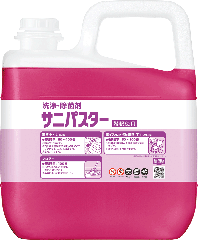
- Introduced product text:
Sanipaster
- Interviewees:
- Name:
Dr. Paiboon Rungsuriyasilp, Title:
Owner of the hospital, Background:
A veterinarian in a private hospital. After that, opened his own hospital for 23 years.
Steps taken to introduce Sanipaster S(L)
- Why did the hospital become interested in using Sanipaster S(L)?
The main issue for our animal hospital was unpleasant odors from pets’ bodies, feces, and urine. These odors, caused by bacteria or other...
- Magazine Volume:
2025 Vol. 1
- Article number:
4
- Content Type:
SARAYA Healthcare Hygiene News
- Category:
Hand Hygiene
- Facility:
General
- Field to link to full PDF field:
HosCom_International_2025_vol1.pdf
- Authors :
Dr. Koji Kihara, SARAYA Co., Ltd.
- References:
- Taro Furuta, Koji Kihara, Makoto Takechi, Hirofumi Ogase, and Isamu Nagai, "Comparative study of the antimicrobial effect of two alcoholic preparations containing chlorhexidine digluconate on the normal flora and the artificial contaminations of the hands", Antibacterial and Antifungal Agents, 15, 505-510 (1987).
- Hachiro Tagami, "Evaluation of the measurement of the moisturizing effect of the skin surface", Journal of Fragrances, 56, 14-18 (1982).
- Koji K.ihara, Yuji Murata, Taro Furuta, and Nobuhiko Higashi, "Effect of various alcoholic hand disinfectants on water content of skin surface", Skin Research,36(3), 349- 353 (1994).
- Disinfection composition for medical use, US Patent 5017617 (1991).
- Disinfection composition, Kokoku (examined patent publication) No. 4-33226 (1992).
- Disinfection composition, Kokoku (examined patent publication) No. 5-63446 (1993).
Cumulative efficacy of the disinfectant of Hibiscohol A
Hibiscohol A is an alcohol-based, quick-drying hand disinfectant containing chlorhexidine gluconate (CHG), as well as the emollients, diisobutyl adipate (DIBA) and PEG-7 glyceryl cocoate (GC)....


