


On 7 December 2022, the European Centre for Disease Prevention and Control (ECDC) published the 2020 surveillance report on hepatitis A infection across the European Union (EU)/European Economic Area (EEA) member state.
Hepatitis A is an acute infection of the liver caused by a small, non-enveloped hepatotropic virus of the family Picornaviridae and the genus Hepatovirus.
The report is part of the annual communicable diseases report published by the ECDC. Member states are mandated to report the incidence of certain communicable diseases as part of the European-wide alert system.
Each country enters its data into the European Surveillance System (TESSy), which is a system for the collection, analysis and dissemination of data on communicable diseases.
Hepatitis A is an inflammation of the liver caused by the hepatitis A virus (HAV). It affects both children and adults.
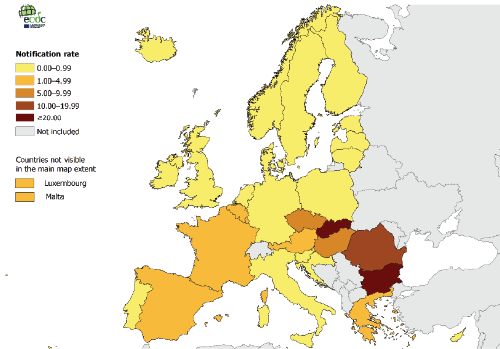
The recent report covers 28 countries, including Iceland and Norway. The report generally showed a decrease in both reported cases and notifications from the countries. The potential impact of the Covid-19 pandemic on the general outlook of the report was not indicated, although one would expect some level of impact, particularly at the onset of the outbreak and peak in 2020.
Epidemiology
Relative to the 2019 surveillance report, a significant reduction ranging between 70% and 90% was reported in several members, including France, Greece, Hungary, Italy, Malta, the Netherlands, Poland, Slovakia and Spain, with Poland reporting the highest reduction of 90%.
Only Denmark, Estonia, Lithuania and Luxembourg reported increases of between 13% and 75%.
Only Spain was reported as not providing data for 2020 because of Covid-19. This may suggest that the potential impact of the Covid-19 pandemic on the whole data for 2020 was adequately represented, although one would expect some level of impact, particularly at the onset of the Covid-19 outbreak and the various peaks in each country.
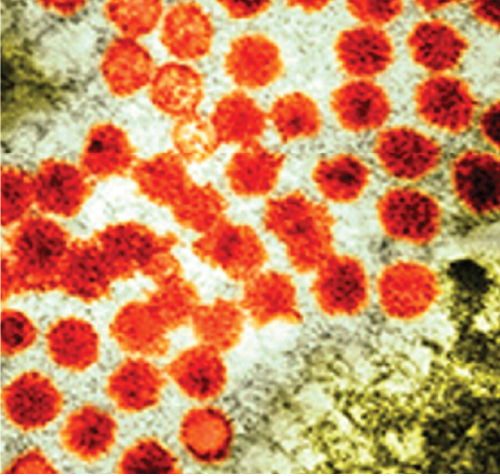
Hepatitis A virus
How is the hepatitis A virus transmitted?
The virus is highly transmissible and has an average incubation period of four weeks, ranging from two to six weeks. Transmission most often occurs via the faecal–oral route through contaminated food and water or via person-to-person contact (e.g. among household contacts, sexual contacts, day-care centres or schools)
What are the signs or symptoms of infection?
HAV infection is often asymptomatic or mild in children, whereas at its onset in adults, the illness is usually abrupt, characterised by fever, malaise and abdominal discomfort. The predominant symptom is jaundice. Although very severe diseases are unusual, infection can lead to acute liver failure and death, mostly in the elderly and in patients with liver disease.
What are the typical symptoms of hepatitis A infection to watch out for?
Common look-out symptoms include:
- High temperature
- Flu-like symptoms or feelings, such as tiredness, headache and muscle pains
- Feeling sick or being sick
- Pain in your upper stomach
- Diarrhoea or constipation
- Pale yellow or pale grey stool
- Dark brown urine
- Itchy skin and/or raised rashes
- Yellowing of the skin and whites of the eyes (jaundice)
Most children and some adults may have mild symptoms or no symptoms (asymptomatic individuals)
What is the duration of the symptoms?
The symptoms may last from one or two weeks to months.
How can I prevent having hepatitis A virus disease?
Vaccination is the best-recognised way to prevent hepatitis A infection. It is routinely given in many healthcare systems by contacting a medical practitioner.
Are there other ways I can reduce risk without vaccination or in addition?
Yes, the following measures are recommended:
- Washing hands thoroughly before preparing and eating food
- Drinking bottled water
- Avoid eating shellfish and uncooked fruits and vegetables
- Practicing protective sex
-
Publication Date:December 12, 2023
-
Category:Outbreak
HosCom International 2023 Vol. 2
