


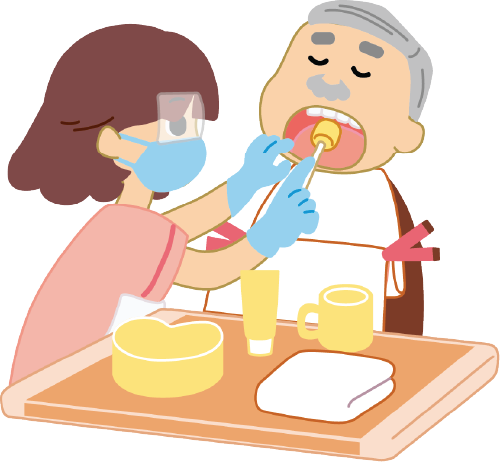
The oral cavity contains many pathogenic microorganisms, such as Candida Staphylococcus aureus, and Pseudomonas aeruginosa1. During oral care procedures, there is a risk of splashing moist biological substances such as saliva and blood. Therefore, adherence to standard precautions is essential.
Investigation of Splash Dispersion of Cleaning Solution During Oral Care2
Method
<ATP Measurement Method>
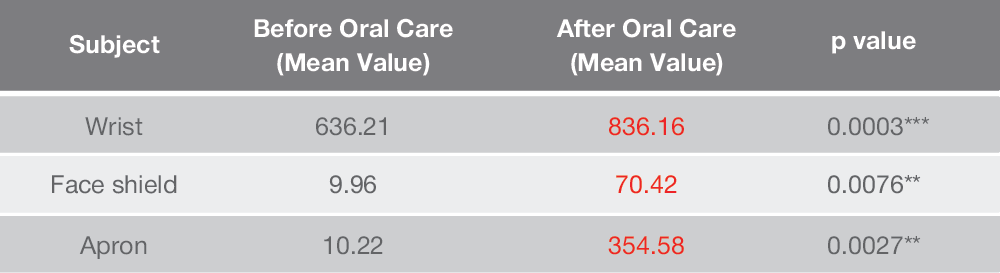
ATP was measured before and after oral care by swabbing the nurse's wrist, face shield, and apron surface with a dedicated swab. The amount of ATP collected was quantified as RLU (Relative Light Units).
What is the ATP Measurement Method?
Adenosine triphosphate (ATP) is a chemical compound found in all living organisms. It serves as an energy source for vital biological activities and is present in biological substances such as blood and bodily fluids. The ATP measurement method utilizes a luminescent reaction between ATP and an enzyme called luciferase to measure the relative light units (RLU). A higher amount of ATP results in stronger luminescence (higher RLU values), which is interpreted as a higher level of contamination by biological substances such as blood or bodily fluids.
Result
- RLU values significantly increased after oral care on all measured surfaces: the wrist, face shield, and apron.
|
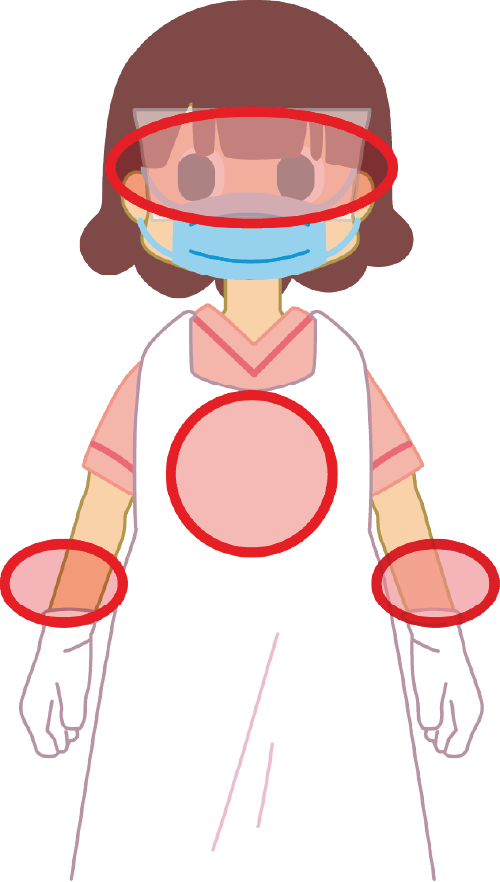 |
Due to factors such as brushing, suctioning, and the elevated head position during oral care, moist biological substances such as saliva and blood may be dispersed not only to the eyes and mouth but also onto clothing. Therefore, it is necessary to wear gloves, masks, eye protection, and aprons/gowns during oral care procedures2-4.
- Gloves and aprons/gowns should be changed for each care recipient. Since eye protection and masks do not come into direct contact with the care recipient, they should be replaced whenever contamination is observed3
- Gloves must be worn when cleaning oral care instruments after use4.
-
Publication Date:November 26, 2025
-
Category:Oral Care, PPE
HosCom International 2025 Vol. 2
