


Introduction
Carbapenems are key β-lactam antibiotics(1) ; however, their inappropriate use has contributed to the growing prevalence of Carbapenem-resistant gram-negative bacilli (CRGNB)(2). These pathogens spread horizontally via Carbapenem-resistance genes (CRGs). Because intensive care unit (ICU) patients are frequently exposed to invasive procedures and antibiotics, they are at a particularly high risk of CRGNB colonization and infection(4) . Active screening enables the early detection and timely implementation of infection prevention and control (IPC)(5) measures to reduce healthcare-associated infections such as CRGNB. This study aimed to determine the intestinal CRGNB colonization rate and its associated factors among ICU patients and to evaluate the effectiveness of targeted IPC interventions against CRGNB.
1. Materials and Methods
1.1. Study Population
Patients admitted to the ICU between January 1, 2024 and December 31, 2024 were included. The inclusion criteria consisted of critically ill patients who had undergone invasive procedures or surgery and completed rectal swab screening within 24 hours of ICU admission. Multiple ICU admissions by the same patient were recorded separately. The exclusion criteria included pregnant women, untestable samples and community-acquired infections.
1.2. Methods
1.2.1. Data Collection
Demographic information, number of hospitalization days before ICU admission, and details of antimicrobial type and duration were obtained from the hospital infection surveillance system.
1.2.2. Specimen Collection and Detection of CRGs
Rectal swab specimens were collected and tested using the GeneXpert automated system and DNA extraction kits. CRGs, including blaKPC, blaNDM, blaVIM, blaOXA-48, blaIMP (3,6), were detected by Real-time Polymerase Chain Reaction.
1.2.3. Intervention and Evaluation
Comprehensive IPC measures, such as patient isolation, environmental disinfection, hand hygiene and antimicrobial stewardship, were implemented for CRGNB-colonized patients in 2024. ICU lengths of stay and patient outcomes were compared between 2023 (baseline period) and 2024 (intervention period).
1.3. Statistical Analysis
Statistical analyses were performed using IBM SPSS Statistics Version 26. Normally distributed continuous data were presented as mean ± standard deviation (X̄ ± S) and compared between groups using an independent-samples t-test. Non-normally distributed continuous data were expressed as median (P25, P75) and compared using the Mann–Whitney U test. Categorical data were presented as n (%) and compared using the χ² test or Fisher's exact test, as appropriate. Multivariate analysis was performed using logistic regression. A two-sided significance level of α = 0.05 was used.
2. Results
2.1. CRGNB Colonization Rate and CRG Distribution
Among the 748 screened patients, the intestinal CRGNB colonization rate was 11.48%. Among the 86 colonized cases, blaNDM was the most frequently detected gene (59.30%), followed by blaIMP (39.53%) and blaKPC (22.09%). Some patients have carried multiple CRGs simultaneously.
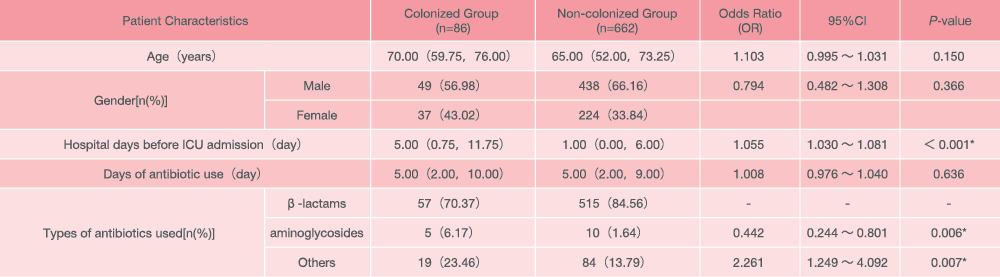
Table 1. Logistic regression analysis of the colonization of CRGNB in ICU patients' intestinal tracts
2.2. Factors Associated with CRGNB Colonization
Univariate analysis revealed no significant differences in age, sex or duration of antimicrobial use between the colonized and non-colonized groups (P > 0.05). However, the duration of hospitalization before ICU admission (OR = 1.055, P < 0.001) and the type of antibiotic used were significantly associated with colonization risk. Patients receiving aminoglycosides had a lower risk of colonization (OR = 0.442, P = 0.007), whereas those treated with other antibiotic classes had a higher risk (OR = 2.261, P = 0.007).
2.3. Effects of Infection Control Measures
Compared to 2023, following the implementation of targeted IPC interventions in 2024, the median ICU duration of stay decreased from 6 days to 5 days (P < 0.001), and the mortality rate declined from 34.42% to 27.62% (P = 0.006).
3. Discussion
This study demonstrated that the intestinal CRGNB colonization rate among ICU patients was 11.48%, which was predominantly associated with the blaNDM gene. Prolonged hospitalization before ICU admission was identified as an independent risk factor, possibly due to increased exposure to antimicrobial resistance in the hospital environment and selective pressure from broad-spectrum antibiotic use. Conversely, aminoglycoside use was linked to a lower risk of colonization, likely because these agents exert a minimal impact on intestinal microbiota and are less prone to induce carbapenemase(7) expression.
Active screening combined with rapid molecular diagnostics allows for the early identification of colonized patients and facilitates prompt IPC interventions. This study confirmed that a combination of isolation, enhanced environmental disinfection and antimicrobial stewardship effectively reduces CRGNB transmission, shortened ICU stays and improved patient outcomes. However, as a single-center retrospective analysis, this study did not account for underlying conditions. Future studies using propensity score matching are warranted to further evaluate the impact of CRGNB colonization on patient prognosis.
4. Conclusion
The intestinal CRGNB colonization rate among ICU patients remainsrelatively high. Efforts to reduce pre-ICU hospitalization duration, optimize antimicrobial use and strengthen active screening and isolation practices are essential to mitigating CRGNB transmission and improving patient outcomes(8).
-
Publication Date:August 04, 2026
-
Category:HAI
HosCom International 2026 Vol. 2
