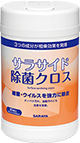
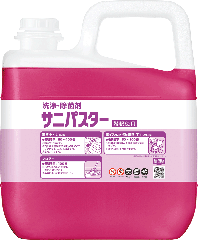
Preparations to Prevent a Norovirus Outbreak

  • Hospital Name: Arimakougen Hospital
  • Facility: Acute Care Hospital
  • Article number: 1
  • Address: 4663-3, Nagaocho Kozu, Kita-ku Kobe City, Hyogo
  • Number of beds: 417 (360/Psychiatric care, 57/Long-term care)
  • Total number of staff: 360 (Psychiatric care), 57(Long-term care)
  • Number of surgeries: 0
  • Website: http://www.arimakougen.or.jp/
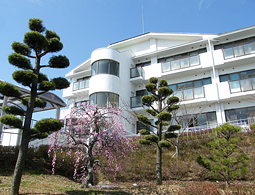
  • Introduction text: Arimakogen Hospital is located in the Arima Highlands area of Kobe city. Based on its philosophy, 'To provide medical care and welfare services with love, to cooperate in harmony, and to devote ourselves to creative ingenuity', the hospital offers comprehensive psychiatric care and welfare services. Arimakogen's verdant setting, in 130,000 ㎡ of parkland, features not only healthcare facilities, but also a farm and bird sanctuary, offering a calm and healing environment for patients.
  • Other hospital photos:
    • Hospital photos:
    • Hospital photos:
  • Introduced product photos:
    • Products:
    • Products:
  • Introduced product text:

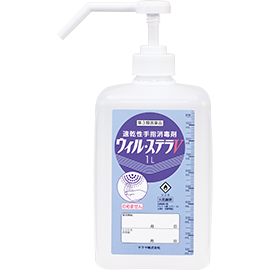
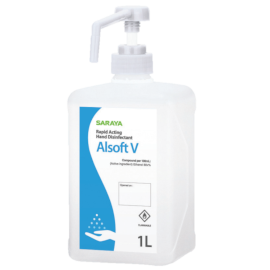
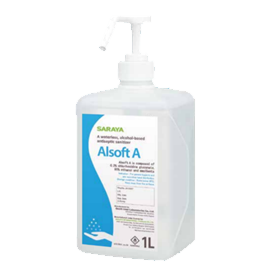
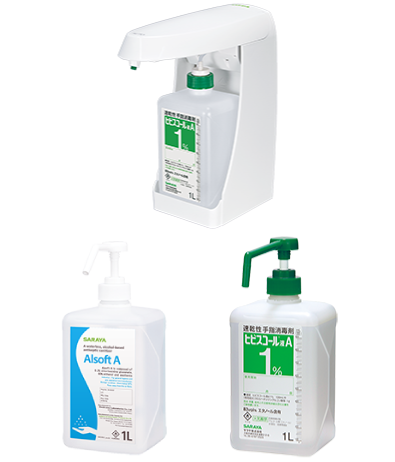
    Alcohol-based hand rub
    ウィル・ステラV (Alsoft V)

  • Interviewees:
    • Name: Ms. Mitsuko Tsuji, Title: Head of the long-term care division. Aoisoranosato Long-term Care Facility., Photo: , Background: 1996: Joined the facility 2001: Qualified as a long-term care support specialist 2008: Qualified as a long-term care health facility risk manager

    • Name: Mr. Yuji Fujii, Title: Chief Nurse Ward B2, Photo: , Background: 2003: Joined the facility  
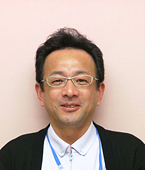
  • Editor note: Many patients receive long-term care, and they assumed that most microorganisms affecting them are brought from outside the facility by staff or visitors. With this in mind, Alsoft V was installed at all facility entrances. We were impressed by the staff determined to prevent the intrusion of pathogens from outside. At the same time, various approaches for improving hand hygiene compliance, such as using a no-touch dispenser or portable product, have been implemented. This prepared environment and heightening the staff's consciousness of the importance of hand hygiene could be two of the most important elements in preventing further infections.
  • Footnote: 8 April 2011 Y. Yoshida, K. Komatsu, H. Imai Academic Department, Medical Division Saraya Co., Ltd.
Steps taken to introduce Alsoft V - What background led you to consider introducing Alsoft V in your facility? Two years ago, we experienced a month-long outbreak of Norovirus. We devoted a lot of money and effort to contain the outbreak, and the...

Continue reading

  • Hits: 6067

The Introduction of the Rubbing Method through a Multilateral Approach

  • Hospital Name: Gifu University Hospital
  • Facility: Acute Care Hospital
  • Article number: 1
  • Address: 1-1 Yanagido, Gifu City, Gifu, Japan
  • Number of beds: 606
  • Total number of staff: 1,170 (as of September, 2011)
  • Number of surgeries: 4,868 (April 2010 to March 2011)
  • Website: https://www.hosp.gifu-u.ac.jp/eng/
  • Introduction text: Founded at the beginning of the Meiji Era (the late 19th century), Gifu University Hospital has gained a long history of providing medical care as the leading hospital in the region. Currently, the hospital serves as a central hospital for intractable diseases, officially designated cancer hospital, and advanced emergency medical services centre, offering advanced and high-standard medical treatments. Along with these services, the hospital also offers palliative care to treat the physical and mental distress of patients. The hospital is also dedicated to the development of medical personnel and promotes the improvement of medical care quality, assurance of medical safety, and team medical care. The operation department of the hospital serves as part of the government-designated advanced treatment facility and the central clinical facility of the acute care hospital. It stands by its philosophy of offering an environment where all patients can receive safe, standardized, efficient, and high-quality perioperative care, regardless of whether on planned or emergency occasions. Now we will introduce how the Gifu University Hospital operation department introduced the rubbing method for surgical hand preparation.
  • Introduced product photos:
    • Products:
    • Products:
  • Introduced product text:

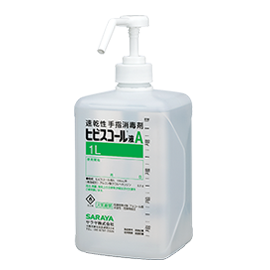
    Alcohol-based hand rub

    ヒビスコール液A
    (Alsoft A)

  • Interviewees:
    • Name: Ms. Taeko Murase, Title: Chief nurse of the operation department, Photo: , Background: 1989: Began working in the operation department of Gifu University Hospital 1998: Began working on the surgery ward 2006: Became chief training nurse 2009: Became chief nurse of the operation department
    • Name: Mr. Katsunori Kakimi, Title: Nursing department member of the Infection Control Committee, Photo: , Background: 2002: Began working in the operation department of Gifu University Hospital 2009: Became a member of the nursing department infection control committee.
  • Editor note: Recently, the use of the rubbing method has been growing worldwide, and Gifu University Hospital made their transition to this method possible through the initiative of nurses. The hospital eventually implemented and made the entire staff familiar with the rubbing method through a variety of efforts, gaining the help and understanding of doctors. This hospital-wide systematic effort made after SSI incidents led to the need for cooperation from the entire staff. Their self-made and original DVD, "Surgical Hand Preparation Using the Rubbing Method", has been posted on YouTube. We were impressed by their broad perspective and approach of looking beyond their own hospital, sharing it so that other facilities may also use it.
  • Footnote: August 24, 2011 Y. Yoshida, S. Indo, N. Nozu Academic Department, Medical Division Saraya Co., Ltd.
Steps taken to introduce the rubbing method - What is the background that led you to consider the introduction of the rubbing method? In 2006, a member of the infection control team (ICT) from our operation department performed some research and...

Continue reading

  • Hits: 7027

Hand Hygiene as a Countermeasure against the Norovirus Outbreak

  • Hospital Name: Sanda City Hospital
  • Facility: Acute Care Hospital
  • Category: Hand Hygiene
  • Article number: 1
  • Address: 3-1-1 Keyakidai, Sanda city, Hyogo, Japan
  • Number of beds: 300 (general)
  • Total number of staff: 589 (including contract)
  • Number of surgeries: 2,561 (April 2010 to March 2011)
  • Website: https://www.hospital.sanda.hyogo.jp/
  • Introduction text: Located in Sanda City, Hyogo, Sanda City Hospital has served as the leading hospital in the region since 1949, providing comfortable, satisfying, and heart-warming medical care. It is also a designated training facility for postgraduate clinical training and an institute-designated specialist training facility, and thus contributes to the further development of healthcare.
  • Introduced product photos:
    • Products:
    • Products:
  • Introduced product text:

    Alcohol-based hand rub

    ウィル・ステラV
    (Alsoft V)

  • Interviewees:
    • Name: Mr. Tomoyuki Nakamura, Title: Infection Control Officer, Assistant Chief of the Nursing Department. Certified Nurse in Infection Control, Photo: , Background: 1995: Began working at Sanda City Hospital 1998: Became Nursing Department ICC member 2007: Became Certified Nurse in Infection Control and started working with ICC 2010: Became Infection Control Officer
  • Editor note: We were especially impressed by the speed of the initial response, from the confirmation of the norovirus to the consideration of and the determination to use Alsoft V. We must say that the prompt response and staff adherence to hand hygiene protocols resulted in preventing the spread of the norovirus. In addition, placing Alsoft V at the entrance of the hospital, along with the usage instruction panel made by the nursing department administration staff, shows how much the hospital cares for raising awareness of hand hygiene practices among the staff, the patients and their families.
  • Footnote: April 8, 2011 Y. Yoshida, K. Komatsu, H. Imai Academic Department, Medical Division Saraya Co., Ltd.
Outbreak and the initial response - Please tell us about your countermeasures against the norovirus outbreak last winter.   Mr. Tomoyuki Nakamura On January 18, 2011, we confirmed that several patients in one ward manifested diarrhoea,...

Continue reading

  • Hits: 7916

Actions Taken to Prevent Skin Irritation

  • Hospital Name: Kitasato University East Hospital
  • Facility: Acute Care Hospital
  • Category: Hand Hygiene
  • Article number: 1
  • Address: 2-1-1 Asamizodai, Minami-ku, Sagamihara-shi, Kanagawa, Japan
  • Number of beds: 538
  • Total number of staff: approx. 800 (excl. temp staff)
  • Number of surgeries: 1,825 (April 2011 to March 2012)
  • Website: https://www.kitasato-u.ac.jp/ehp/
  • Introduction text: Located in Sagamihara City, Kanagawa, Kitasato University East Hospital has three main centres (the Digestive System Disease Diagnosis Center, the Neurologic and Motor System Disease Diagnosis Center and the Psycho-Neurologic Disease Diagnosis Center) and implements various medical treatments from acute to chronic stages. Opened in April 1986, Kitasato University East Hospital has been rooted in the community for more than 26 years. The hospital follows its principles of providing patient-centred clinical practice, high quality and advanced medical care and contributions to the community health.
  • Introduced product photos:
    • Products:
    • Products:
  • Introduced product text:

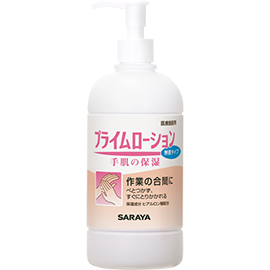
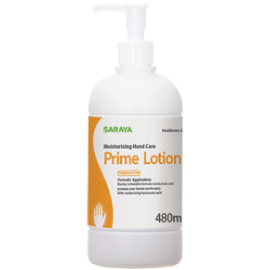
    Hand care lotion

    プライムローション 無香タイプ
    Prime Lotion (Non-Fragrance)

  • Interviewees:
    • Name: Ms. Nobuko Fukahori, Title: Assistant Chief, Infection Control Team. Certified Nurse in Infection Control., Photo: , Background: 1988: Began working in Kitasato University East Hospital; has worked in gastrointestinal medicine, the surgical ward, outpatient dept. and operating theatre 2008: Became Certified Nurse in Infection Control. Full-time infection control team official since 2011
    • Name: Mr. Kenichi Shimizu, Title: Occupational Safety Team/Infection Control Team. Assistant Manager., Photo: , Background: 1986: Began working in Kitasato University Hospital; has worked in the medical affairs section and the personnel section 2010: Transferred to Kitasato University East Hospital (In charge of medical safety and the infection control team)
  • Editor note: Kitasato University East Hospital has addressed hand hygiene with enthusiasm and has regarded hand care as an important component of hand hygiene practice. We were impressed that the hospital supplied hand lotion, as it is an infection control measure and helps reduce the burden on the staff. It is also impressive that the link staff has been active in playing an important role, such as continuous hand hygiene training and environmental contamination evaluation; this includes their quick response to the results of the evaluation.
  • Footnote: August 30, 2012 Y. Yoshida, H. Endo Academic Department, Medical Division Saraya Co., Ltd.
Steps taken to introduce Prime Lotion - What is the background that led you to consider introducing Prime Lotion? We recognized that skin irritation can cause the colonization of bacteria and can also lead to lower hand hygiene compliance rates....

Continue reading

  • Hits: 7777

Hospital-wide Efforts Toward Thorough Hand Hygiene

  • Hospital Name: Kobe Rosai Hospital
  • Facility: Acute Care Hospital
  • Category: Hand Hygiene
  • Article number: 1
  • Address: 4-1-23, Kagoikedori, Chuo-ku, Kobe city, Hyogo, Japan
  • Number of beds: 360
  • Total number of staff: 452
  • Number of surgeries: 3,141 (April 2010 to March 2011)
  • Website: https://www.kobeh.johas.go.jp/
  • Introduction text: Located on the mountainside of central Kobe, Japan Organization of Occupational Health and Safety Kobe Rosai Hospital is an advanced treatment hospital with up-to-date equipment, which promotes health care for workers. The hospital also exchanges information with private doctors in the local medical society, through clinical conferences and academic meetings. As a leading hospital in the region, Kobe Rosai Hospital provides safe, high-quality medical care.
  • Introduced product photos:
    • Products:
  • Introduced product text:

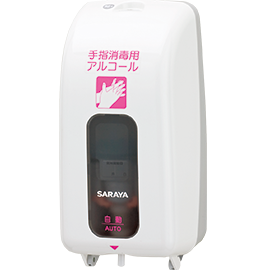
    Sensor activated dispenser

    UD-8600

  • Interviewees:
    • Name: Ms. Chifumi Suzuki, Title: Community Healthcare Chief Nurse. Certified Infection Control Nurse, Photo: , Background: 1986: Started working at Kobe Rosai Hospital 2004: Became a member of ICT 2009: Became a Certified Infection Control Nurse
  • Editor note: With the recent rise in hand hygiene awareness, many hospitals have started implementing dispensers. However, Kobe Rosai Hospital has a particularly strong environment of hand hygiene, with automated dispensers next to all patients' rooms, on nurses' trolleys and for nurses to carry on themselves. The hospital also conducts training sessions with ICT, which staff from different job categories attend so that hand hygiene is taught thoroughly, which conveys their hospital-wide awareness of hand hygiene.
  • Footnote: July 26, 2011 Y. Yoshida, S. Indo, N. Nozu Academic Department, Medical Division Saraya Co., Ltd.
Steps taken to introduce UD-8600 - What led you to consider UD-8600?   Ms. Suzuki, Chief Nurse Prior to introducing UD-8600, we used manually operated dispensers, for their sophisticated appearance and ability to retain the chemical...

Continue reading

  • Hits: 7590

Pursuing Correct Hand Hygiene Practices

  • Hospital Name: Chugoku Central Hospital
  • Facility: Acute Care Hospital
  • Category: Hand Hygiene
  • Article number: 1
  • Address: 148-13 Miyukicho Oaza Kamiiwanari, Fukuyama-shi, Hiroshima, Japan
  • Number of beds: 277 (General 271, TB 6)
  • Total number of staff: 469
  • Number of surgeries: 1,800 (April 2010 to March 2011)
  • Website: http://www.kouritu-cch.jp/
  • Introduction text: The Chugoku Central Hospital of the Japan Mutual Aid Association of Public School Teachers is located in Fukuyama City, Hiroshima Prefecture, and opened in 1961 as a sanatorium for patients with tuberculosis. In 1979, it became a general hospital and developed as a core hospital in the community, promoting team medical care. In 2010, it was selected by the Hiroshima Prefecture to be a Designated Cancer Hospital and is currently being developed into a regional core hospital. Together with certified/specialised doctors qualified by medical societies, the hospital is contributing to local communities, based on the philosophy of providing patient-centred, "people-friendly and high-quality medical care".
  • Introduced product photos:
    • Products:
    • Products:
  • Introduced product text:

    Alcohol-based hand rub

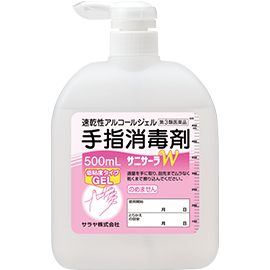
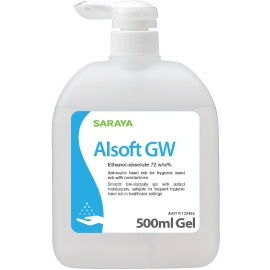
    サニサーラW
    ( Sanisara W / Alsoft GW )

  • Interviewees:
    • Name: Ms. Midori Takahashi, Title: Deputy Head Nurse, Medical Safety Management Office. Certified Infection Control Nurse., Photo: , Background: 1985: Began working at Chugoku Central Hospital 2006: Certified as an Infection Control Nurse
  • Editor note: We were impressed with the enthusiastic on-site activities led by the Link Nurse Association to improve safety, including infection control, with the aim of providing safe and secure medical care. We believe that thorough awareness of infection control measures, particularly hand hygiene and instructions for donning and removing personal protective equipment, is a regular activity that is essential to prevent healthcare-associated infections and is a major premise for medical safety. We could see that the hospital places special emphasis on education to support medical safety.
  • Footnote: 24th April, 2012 Y. Yoshida, N. Nozu, T. Koinuma Academic Department, Medical Division Saraya Co., Ltd.
Steps taken to introduce Sanisara W - What is the background that led you to consider introducing Sanisara W? Prior to the introduction of Sanisara W, we used liquid hand disinfectants from other companies. For the liquid hand disinfectants, the...

Continue reading

  • Hits: 8143

Promoting Hand Hygiene with Unique Ideas

  • Hospital Name: Hospital Canselor Tuanku Muhriz UKM(HCTM)
  • Field to link to full PDF field: HosCom_International_2024_vol1.pdf
  • Facility: Acute Care Hospital
  • Category: Hand Hygiene
  • Article number: 2
  • Address: Jalan Yaacob Latif, Bandar Tun Razak, 56000 Kuala Lumpur, Wilayah Persekutuan Kuala Lumpur, Malaysia
  • Number of beds: 1,300
  • Total number of staff: 4,000
  • Website: https://hctm.ukm.my/en/
  • Introduction text: Located in Kuala Lumpur, Malaysia, Hospital Canselor Tuanku Muhriz UKM (HCTM), provides high-quality medical services to the community and residents in training. The hospital’s predecessor was the Faculty of Medicine UKM, established in 1973, which produced specialists in various fields of medicine and health. HCTM provides comprehensive and integrated training through advanced facilities to both undergraduate and postgraduate students from the Faculty of Medicine, Faculty of Allied Health Sciences, and Faculty of Dentistry under the motto “Integrating Learning and Research for the Betterment of Society.”
  • Introduced product photos:
    • Products:
  • Introduced product text:

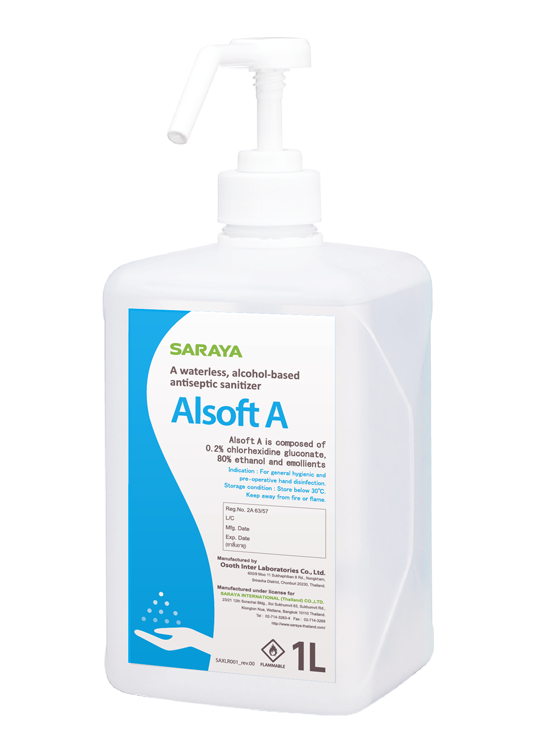
    Alcohol-based hand rub (ABHR)

    Alsoft Liquid Hand Disinfectant A

  • Interviewees:
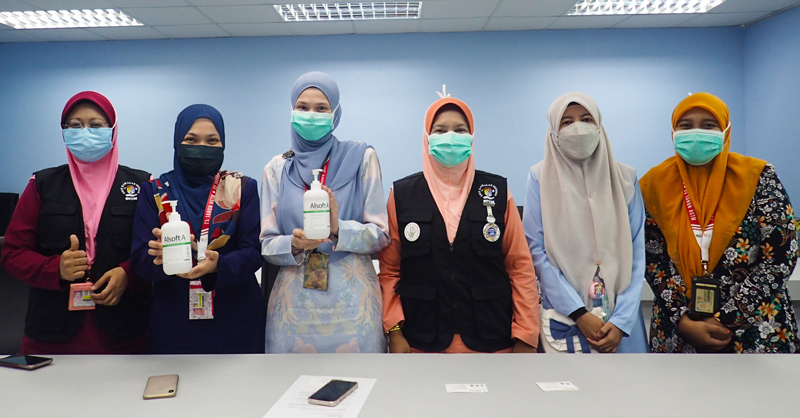
    • Title: From left, Ms. Puan Zurina Mohamad Saleh, Dr. Nur Ayuni Ahamad Faudzi, Dr. Maliha Farah Nurhazirah, Ms. Siti Rokiah Yusof, Ms. Puteri Fairuz Izyan Zainuddin, and Ms. Siti Amirah Ramli., Photo:
  • Editor note: We interviewed doctors and nurses who work in the Infection Prevention and Control Department. Although their roles in the hospital vary, they work together as a team to ensure thorough infection control and staff education.
Steps taken to introduce Alsoft a - WHEN DID YOU HEAR ABOUT ALSOFT A FOR THE FIRST TIME? I first heard about Alsoft A over 15 years ago. I had heard from other alcohol disinfectant manufacturers that its formulation is excellent, and I was always...

2024 Vol. 1

Continue reading

  • Hits: 6546

Continuous Promotion to Increase Hand Hygiene Compliance

  • Hospital Name: Hospital Ampang
  • Field to link to full PDF field: HosCom_International_2023_v2.pdf
  • Facility: Acute Care Hospital
  • Category: Hand Hygiene
  • Article number: 3
  • Address: Jalan Mewah Utara, Pandan Mewah, 68000 Ampang, Selangor Darul Ehsan
  • Number of beds: 700
  • Website: https://hampg.moh.gov.my/
  • Introduction text: HospitalAmpang, established in 2006 as a Malaysian national project, is located in Taman Pandan Mewah, Ampang, Selangor Darul Ehsan, adjacent to Kuala Lumpur,and provides medical services to the local population. The hospital is a national referral center for hematology care and offers tertiary and secondary medical care.
  • Introduced product photos:
    • Products:
  • Introduced product text:

    Alcohol-based hand rub (ABHR)

    Alsoft Liquid Hand Disinfectant A

  • Interviewees:
    • Name: Dr. Nur Farhanal Ismail, Photo: , Background: 2012: Joined the facility and began working at the Obstetrics and Gynecology Department 2019: Began working at the Infection Control Unit
feedback on Alsoft a - HOW DID YOU LEARN ABOUT ALSOFT A? Dr. Nur Farhanal Ismail In 2012, I started working at the Obstetrics and Gynecology Department (O&G) by providing clinical services. I have been using Alsoft A since I started...

2023 Vol. 2

Continue reading

  • Hits: 9887

Introducing a No-Touch Dispenser Dedicated to Surgical Hand Disinfection

  • Hospital Name: Okazaki City Hospital
  • Facility: Acute Care Hospital
  • Category: Hand Hygiene
  • Article number: 1
  • Address: 3-1, Goshoai, Koryujicho, Okazaki, Aichi 444-8553
  • Number of beds: 715
  • Total number of staff: 1,424
  • Number of surgeries: 5,396
  • Website: http://www.okazakihospital.jp/
  • Introduction text: Since its establishment in 1878 as an Okazaki Branch Hospital within the Aichi Prefectural Public Hospital system, Okazaki Municipal Hospital has been a core regional medical facility that has continued to develop with a focus on advanced acute care. "To always strive to be a hospital that is trusted by local residents”. Based on this philosophy, the hospital is actively working to enhance its medical systems, including the introduction of state-of-the-art radiotherapy equipment, with the aim of providing the best possible medical services.
  • Introduced product photos:
    • Products:
  • Introduced product text:

    No-touch Dispenser TUD-1000
    ノータッチ式ディスペンサー TUD-1000

    Alcohol-based hand rub

    Alsoft Hand Disinfectant A
    ヒビスコール液A1.0%
    (Hibiscohol A 1.0%)

  • Interviewees:
    • Name: Mr. Rikiya Sato, Title: Pharmacist, Infection Control Office, Pharmacy /Pharmacist, Photo: , Background: April 2013: Joined Okazaki City Hospital
    • Name: Mr. Seiji Sugiura, Title: Certified Infection Control Nurse, Infection Control Office, Photo: , Background: April 1998: Joined Okazaki City Hospital April 2013: Certified as Certified Infection Control Nurse April 2015: Joined Infection Control Office
    • Name: Ms. Mariko Hamatani, Title: Chief nurse, Nursing Team, Photo: , Background: April 1991: Joined Okazaki City Hospital
  • Editor note: The Saraya exhibition booth at the conference of the Japanese Society of Infection Prevention and Control showcases new products every year. It is our top priority to provide you with the proper tools to solve your facility's problems as we did in many facilities this year. In addition to our exhibition booth, we also strive to disseminate information through various media such as our website. Thus, we will do our best to continually bring you new information and innovations that will be of interest to you.
STEPS TAKEN TO INTRODUCE NO-TOUCH DISPENSER TUD-1000 - How are hands disinfected before surgery? In the past, the scrubbing method with antimicrobial soap was used in the hospital. But when rubbing with alcohol hand disinfectant was recommended by...

Continue reading

  • Hits: 6468

Sponge Brush Contributes to the Reduction of VAP Cases

  • Hospital Name: Cho Ray Hospital
  • Field to link to full PDF field: HosCom_International_2024_vol2.pdf
  • Facility: Acute Care Hospital
  • Category: Oral Care
  • Article number: 5
  • Address: 201B Đ. Chí Thanh, Phường 12, Quận 5, Thành phố Hồ Chí Minh 700000, Vietnam
  • Number of beds: 3,200 (As of July, 2024)
  • Total number of staff: 4,500 (As of July, 2024)
  • Website: http://www.choray.vn/
  • Introduction text: Cho Ray Hospital is one of the largest hospitals in Vietnam and is located in the southern part of the country. The hospital is under the Ministry of Health and provides special and high-level care for patients while functioning as a training and practical facility for medical students. In addition, the hospital plays a wide range of roles, including providing health checkups for local residents and foreigners and conducting research on the prevention of infectious diseases. As Cho Ray Hospital is one of the largest healthcare facilities in the country, many patients seek care from this hospital every year.
  • Introduced product photos:
    • Products:
  • Introduced product text:

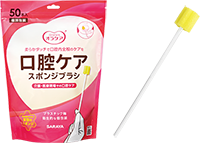
    SARAYA OraCare Oral Care Sponge Brush

  • Interviewees:
    • Name: Ms. Nguyen Thi Ngoc Yen, Title: Head nurse of ICU-C, Background: Work Experience: For 24 years at ICU-C
  • Footnote: Interview date: March 20, 2024
Steps Taken to Introduce SARAYA OraCare Oral Care Sponge Brush - How were implementing oral care prior to the introduction of the sponge brush? Before the sponge brush was introduced, we used normal cottons to implement oral care. We changed the...

2024 Vol. 2

Continue reading

  • Hits: 6698

Improving Work Efficiency with Saracide Sanitizing Wipes

  • Hospital Name: Cho Ray Hospital
  • Field to link to full PDF field: HosCom_International_2024_vol3.pdf
  • Facility: Acute Care Hospital
  • Category: Environmental Management
  • Article number: 4
  • Address: 201B Đ. Chí Thanh, Phường 12, Quận 5, Thành phố Hồ Chí Minh
  • Number of beds: 3,200 (As of July, 2024)
  • Total number of staff: 4,500 (As of July, 2024)
  • Website: http://www.choray.vn/
  • Introduction text: Cho Ray Hospital is one of the largest hospitals in Vietnam and is located in the southern part of the country. The hospital is under the Ministry of Health and provides special and high-level care for patients while functioning as a training and practical facility for medical students. In addition, the hospital plays a wide range of roles, including providing health checkups for local residents and foreigners and conducting research on the prevention of infectious diseases. As Cho Ray Hospital is one of the largest healthcare facilities in the country, many patients seek care from this hospital every year.
  • Introduced product photos:
    • Products:
  • Introduced product text:

    Saracide Sanitizing Wipes

  • Interviewees:
    • Name: Ms. Ngoc Lien, Title: Head nurse of ICU-D, Background: Work Experience: For 25 years at ICU
  • Footnote: Interview date: March 20, 2024
Steps taken to introduce Saracide Sanitizing Wipes - Did you ever use ready-to-use disinfectant wipes before the introduction of Saracide Sanitizing Wipes? We had been using a product containing 70% ethanol, spraying it directly onto the environmental...

2024 Vol. 3

Continue reading

  • Hits: 3477

Removing Dirt and Odors in a Veterinary Hospital with Sanipaster

  • Hospital Name: Doc. Love Dog Animal Hospital
  • Field to link to full PDF field: HosCom_International_2025_vol1.pdf
  • Facility: Animal Hospital
  • Category: Environmental Management
  • Article number: 2
  • Address: 83/4-6 Chaeng Watthana Rd, Thung Song Hong, Lak Si, Bangkok 10210, Thailand
  • Introduction text: Doc. Love Dog Animal Hospital, located in Bangkok, has been serving the community for over 23 years. This veterinary hospital provides a wide range of services, including veterinary treatment, surgery, a pet shop, and a pet hotel. Its high level of medical expertise and exceptional cleanliness attract not only local residents but also visitors from distant areas. The hospital is also well-known for its extensive selection of dog and cat food, along with other pet-related products, leading to a loyal clientele that has been returning for many years.
  • Introduced product photos:
    • Products: Sanipaster
  • Introduced product text:

    Sanipaster

  • Interviewees:
    • Name: Dr. Paiboon Rungsuriyasilp, Title: Owner of the hospital, Background: A veterinarian in a private hospital. After that, opened his own hospital for 23 years.
  • Footnote: Interview date: July 19, 2024
Steps taken to introduce Sanipaster S(L) - Why did the hospital become interested in using Sanipaster S(L)? The main issue for our animal hospital was unpleasant odors from pets’ bodies, feces, and urine. These odors, caused by bacteria or other...

2025 Vol. 1

Continue reading

  • Hits: 2556

Excellence in Hand Hygiene Begins Where Strategy, Leadership, and Culture Come Together

  • Magazine Volume: 2020 Vol. 1
  • Article number: 1
  • Content Type: World Information
  • Category: Hand Hygiene
  • Facility: General
  • Field to link to full PDF field: HosCom_International_2020vol1_web.pdf
  • Authors :

    Alexandra Peters, MA, PhD Candidate & Prof. Didier Pittet, MD, MS, CBE
    Infection Control Program and WHO Collaborating Centre on Patient Safety, The University of Geneva Hospitals and Faculty of Medicine, Geneva, Switzerland

  • References:
    1. World Health Organization. "Health care-associated infections FACT SHEET." (NA). Available at: https://www.who.int/gpsc/country_work/gpsc_ccisc_fact_sheet_en.pdf (Accessed: 18th December 2018)
    2. Pittet, D. et al. "Effectiveness of a hospital-wide programme to improve compliance with hand hygiene. Infection Control Programme." Lancet 356, 1307–1312 (2000).
    3. World Health Organization. "Hand hygiene a key defence in Europe’s fight against antibiotic resistance." (2017). Available at: http://www.euro.who.int/en/health-topics/disease-prevention/antimicrobial-resistance/news/news/2017/05/ hand-hygiene-a-key-defence-in-europes-fight-against-antibiotic-resistance (Accessed: 15th December 2018)
    4. World Health Organization. "Guide to Implementation: A Guide to the Implementation of the WHO Multimodal Hand Hygiene Improvement Strategy." (2009). Available at: https://www.who.int/gpsc/5may/Guide_to_ Implementation.pdf (Accessed: 18th December 2018)
    5. Grayson, M. L. et al. "Outcomes from the first 2 years of the Australian National Hand Hygiene Initiative." The Medical Journal of Australia 195, 615–619 (2011).
    6. S. Fonguh, A. Uwineza, B. Catry, A. Simon & the national hand hygiene working group. "National campaigns to promote hand hygiene in Belgian hospitals: A continuous project." (NA) Available at: https://slideplayer.com/slide/12851324/ (Accessed: 18th December 2018)
    7. Magiorakos, A. P. et al. "Pathways to clean hands: highlights of successful hand hygiene implementation strategies in Europe." Eurosurveillance 15, 19560 (2010).
    8. Sheldon Stone et al. "Report to the Patient Safety Research Programme: on 'The National Observational Study to Evaluate the Cleanyourhands Campaign (NOSEC)' and 'The Feedback Intervention Trial (FIT)'." (2010).
    9. World Health Organization. "World Alliance for Patient Safety: The Launch of the World Alliance for Patient Safety, Washington DC, USA — 27 October 2004." (2018). Available at: http://www.who.int/patientsafety/worldalliance/en/(Accessed: 15th October 2018)
    10. Allegranzi, B. et al. "Global implementation of WHO’s multimodal strategy for improvement of hand hygiene: a quasi-experimental study." Lancet Infectious Diseases 13, 843–851 (2013).
    11. Allegranzi, B. et al. "Successful implementation of the World Health Organization hand hygiene improvement strategy in a referral hospital in Mali, Africa." Infection Control & Hospital Epidemiology 31, 133–141 (2010).
    12. World Health Organization. "Local production of WHO-recommended alcohol based handrubs: feasibility, advantages, barriers and costs." (2013). Available at: http://www.who.int/bulletin/volumes/91/12/12-117085/en/ (Accessed: 30th August 2018)
    13. World Health Organization. "Web sites promoting WHO SAVE LIVES: Clean Your Hands." (2018). Available at: http://www.who.int/infection-prevention/campaigns/clean-hands/SLCYH_support/en/ (Accessed: 31st August 2018)
    14. World Health Organization. "About SAVE LIVES: Clean Your Hands." (2018). Available at: http://www.who.int/gpsc/5may/background/5moments/en/ (Accessed: 15th October 2018)
    15. World Health Organization. "WHO Hand Hygiene Self-Assessment Framework." (2018). Available at: http://www.who.int/gpsc/5may/hhsa_framework/en/ (Accessed: 15th October 2018)
    16. Stewardson, A. J., Allegranzi, B., Perneger, T. V., Attar, H. and Pittet, D. "Testing the WHO Hand Hygiene Self-Assessment Framework for usability and reliability." Journal of Hospital Infection 83, 30–35 (2013).
    17. World Health Organization. "Support from WHO Member States and autonomous areas: Infection Prevention and Control." (2018). Available at: http://www.who. int/infection-prevention/countries/hand-hygiene/statements/en/ (Accessed: 15th October 2018)
    18. World Health Organization. "Private Organizations for Patient Safety (POPS)." (2018). Available at: http://www.who.int/gpsc/pops/en/ (Accessed: 16th December 2018)
    19. World Health Organization. "The First Global Patient Safety Challenge: ‘Clean Care is Safer Care’" (2018). Available at: http://www.who.int/gpsc/clean_care_ is_safer_care/en/ (Accessed: 28th August 2018)
    20. Stewardson, A. J. & Pittet, D. "Historical Perspectives." in Hand Hygiene: A Handbook for Medical Professionals 8–11 (Wiley-Blackwell, 2017). doi:10.1002/9781118846810.ch2
    21. TEDx Talks. Adapt to adopt | Didier Pittet | TEDxPlaceDesNations. (2016).
    22. Fakhry, M., Hanna, G. B., Anderson, O., Holmes, A. & Nathwani, D. "Effectiveness of an audible reminder on hand hygiene adherence." American Journal of Infection Control 40, 320–323 (2012).
    23. World Health Organization. "Guide to Local Production: WHO-recommended Handrub Formulations." Available at: https://www.who.int/gpsc/5may/Guide_ to_Local_Production.pdf (Accessed: 18th December 2018)
Everyone knows that hand hygiene is vitally important in healthcare, but to date, no one has figured out how to achieve optimal compliance. How does one achieve excellence in hand hygiene? In order to analyze this question, one must first understand...

2020 Vol. 1

Continue reading

  • Hits: 1473

Why Should my Hospital use the Hand Hygiene Self-Assessment Framework Proposed by the World Health Organization?

  • Magazine Volume: 2020 Vol. 1
  • Article number: 2
  • Content Type: World Information
  • Category: Hand Hygiene
  • Facility: General
  • Field to link to full PDF field: HosCom_International_2020vol1_web.pdf
  • Authors :

    Chloé Guitart1, Camille Bleeker2, Alexandra Peters1, Didier Pittet1

    1. Infection Control Programme and WHO Collaborating Centre on Patient Safety, University of Geneva Hospitals and Faculty of Medicine, Geneva, Switzerland
    2. University of Geneva Faculty of Medicine, Geneva, Switzerland
  • References:
    1. Allegranzi B, Bagheri Nejad S, Combescure C, Graafmans W, Attar H, Donaldson L, et al. Burden of endemic health-care-associated infection in developing countries: systematic review and meta-analysis. Lancet. 2011 Jan 15 ; 377(9761) : 228–41.
    2. Haley RW, Culver DH, White JW, Morgan WM, Emori TG, Munn VP, et al. The efficacy of infection surveillance and control programs in preventing nosocomial infections in US hospitals. Am J Epidemiol. 1985 Feb; 121(2): 182–205.
    3. Pittet D, Hugonnet S, Harbarth S, Mourouga P, Sauvan V, Touveneau S, et al. Effectiveness of a hospital-wide programme to improve compliance with hand hygiene. Infection Control Programme. Lancet. 2000 Oct 14 ; 356(9238) : 1307–12.
    4. WHO | Infection prevention and control [Internet]. WHO. [cited 2019 Mar 4]. Available from: http://www.who.int/infection-prevention/en/
    5. WHO | 2019 WHO Global Survey on Infection Prevention and Control (IPC) and Hand Hygiene [Internet]. WHO. [cited 2019 Mar 4]. Available from: http://www.who.int/infection-prevention/campaigns/ipc-global-survey-2019/en/
    6. WHO | Core components for IPC - Implementation tools and resources [Internet]. [cited 2019 Feb 27]. Available from: https://www.who.int/infection-prevention/tools/core-components/en/
    7. WHO | WHO Hand Hygiene Self-Assessment Framework [Internet]. WHO. [cited 2019 Mar 2]. Available from: https://www.who.int/gpsc/5may/hhsa_framework/en/
    8. Stewardson A, Allegranzi B, Sax H, Kilpatrick C, Pittet D. Back to the future: rising to the Semmelweis challenge in hand hygiene. Future Microbiol. 2011 Aug; 6(8): 855–76.
    9. Pittet D, Allegranzi B. Preventing sepsis in healthcare - 200 years after the birth of Ignaz Semmelweis. Euro Surveill. 2018 May ; 23(18).
    10. Karamanou M, Panayiotakopoulos G, Tsoucalas G, Kousoulis AA, Androutsos G. From miasmas to germs: a historical approach to theories of infectious disease transmission. Infez Med. 2012 Mar; 20(1): 58–62.
    11. Vermeil T, Peters A, Kilpatrick C, Pires D, Allegranzi B, Pittet D. Hand hygiene in hospitals: anatomy of a revolution. J Hosp Infect. 2019 Apr; 101(4): 383-392
    12. Andrew J. Stewardson, Didier Pittet. Historical Perspectives In Hand Hygiene: A Handbook for Medical Professionals. Wiley Blackwell. Didier Pittet, John M. Boyce and Benedetta Allegranzi; 2017. p. 8–11.
    13. Allegranzi B, Gayet-Ageron A, Damani N, Bengaly L, McLaws M-L, Moro M-L, et al. Global implementation of WHO’s multimodal strategy for improvement of hand hygiene: a quasi-experimental study. Lancet Infect Dis. 2013 Oct; 13(10): 843–51.
    14. Allegranzi B, Storr J, Dziekan G, Leotsakos A, Donaldson L, Pittet D. The First Global Patient Safety Challenge ‘Clean Care is Safer Care’: from launch to current progress and achievements. J Hosp Infect. 2007 Jun; 65 Suppl 2: 115–23.
    15. Sax H, Allegranzi B, Uçkay I, Larson E, Boyce J, Pittet D. ‘My five moments for hand hygiene’: a user-centred design approach to understand, train, monitor and report hand hygiene. J Hosp Infect. 2007 Sep ; 67(1) : 9–21.
    16. Hand Hygiene Technical Reference Manual [Internet]. WHO 2009 [cited 2017 Oct 9]. Available from: http://apps.who.int/iris/bitstream/10665/44196/1/9789241598606_eng.pdf
    17. WHO | Guide to Implementation [Internet]. WHO 2009. [cited 2019 Mar 2]. Available from: http://www.who.int/infection-prevention/publications/hh_implementation-guide/en/
    18. Pittet D, Allegranzi B, Sax H, Chraiti M-N, Griffiths W, Richet H, et al. Doubleblind, randomized, crossover trial of 3 hand rub formulations: fast-track evaluation of tolerability and acceptability. Infect Control Hosp Epidemiol. 2007 Dec ; 28(12) : 1344–51.
    19. Claire Kilpatrick, Julie Storr, Benedetta Allegranzi. A Worldwide WHO Hand Hygiene in Healthcare Campaign. In: Hand Hygiene: A Handbook for Medical Professionals. Wiley-Blackwell. Didier Pittet, John M. Boyce and Benedetta Allegranzi; 2017. p. 275–84.
    20. World Health Organization. Registration update - countries or areas. [Internet]. WHO. [cited 2019 Apr 4]. Available from: http://www.who.int/infectionprevention/campaigns/clean-hands/registration_update/en/
    21. Kilpatrick C, Tartari E, Gayet-Ageron A, Storr J, Tomczyk S, Allegranzi B, et al. Global hand hygiene improvement progress: two surveys using the WHO Hand Hygiene Self-Assessment Framework. J Hosp Infect. 2018 Oct ; 100(2) : 202–6.
    22. Stewardson AJ, Allegranzi B, Perneger TV, Attar H, Pittet D. Testing the WHO Hand Hygiene Self-Assessment Framework for usability and reliability. J Hosp Infect. 2013 Jan ; 83(1) : 30–5.
    23. Allegranzi B, Conway L, Larson E, Pittet D. Status of the implementation of the World Health Organization multimodal hand hygiene strategy in United States of America health care facilities. Am J Infect Control. 2014 Mar ; 42(3) : 224–30.
    24. Kritsotakis EI, Astrinaki E, Messaritaki A, Gikas A. Implementation of multimodal infection control and hand hygiene strategies in acute-care hospitals in Greece: A cross-sectional benchmarking survey. Am J Infect Control. 2018 Oct ; 46(10) : 1097–103.
    25. Bert F, Giacomelli S, Ceresetti D, Zotti CM. World Health Organization Framework: Multimodal Hand Hygiene Strategy in Piedmont (Italy) Health Care Facilities. J Patient Saf. 2017 Jan 10 ;
Healthcare-associated infections are the gravest threat to patient safety in hospitals worldwide1. By establishing infection prevention and control(IPC) teams and programs, hospitals can decrease healthcare-associated infections by at least 30%2, and...

2020 Vol. 1

Continue reading

  • Hits: 2167

Promotion of Hand Hygiene Practice at Schools in Vietnam during COVID-19 Pandemic

Background  The first case of COVID-19 caused by the SARS-CoV-2 virus was confirmed in Vietnam on January 23, 2020.1 Quarantining, monitoring, and restricting people in epidemic areas, border closing, medical warnings, and declarations were...

2021

Continue reading

  • Hits: 279

The Journey of Hand Hygiene in Mubende Regional Referral Hospital

  • Magazine Volume: 2023 Vol. 2
  • Article number: 1
  • Content Type: World Information
  • Category: Hand Hygiene
  • Facility: Acute Care Hospital
  • Field to link to full PDF field: HosCom_International_2023_v2.pdf
  • Authors :

    Sr. BIIRA IDEREDA KATWESIGYE, Senior Nursing Officer
    IPC Member, Mubende Regional Referral Hospital

Introduction Mubende Regional Referral Hospital (RRH) is a 229-bed hospital located in the Western Central Region of Uganda and serves people in the districts of Mubende, Mityana, Kassanda, Kiboga, Kyankwanzi, and parts of Kyegegwa, Kibaale, Sembabule,...

2023 Vol. 2

Continue reading

  • Hits: 427

Event for World Hand Hygiene Day on 5 May in China

  • Magazine Volume: 2023 Vol. 2
  • Article number: 2
  • Content Type: SARAYA Activity Report
  • Category: Hand Hygiene
  • Facility: SARAYA Activity
  • Field to link to full PDF field: HosCom_International_2023_v2.pdf
  • Authors :

    Saraya (Shanghai) Biotech Co., Ltd.

May 5 is Hand Hygiene Day, which was launched by the WHO. Every year, as part of this global campaign, Saraya supports hand hygiene awareness activities in various countries. In this report, we would like to introduce two hand healthcare events that...

2023 Vol. 2

Continue reading

  • Hits: 385

SARAYA-Sponsored Event: New York Opera Performance of Semmelweis

  • Magazine Volume: 2024 Vol. 1
  • Article number: 4
  • Content Type: SARAYA Activity Report
  • Category: Hand Hygiene
  • Facility: SARAYA Activity
  • Field to link to full PDF field: HosCom_International_2024_vol1.pdf
On December 5, 2023, an opera performance sponsored by SARAYA was held at the New York Academy of Medicine in New York, USA, and the performance was shown on YouTube. The opera, by the Brooklyn-based American Opera Project, depicts the life of the...

2024 Vol. 1

Continue reading

  • Hits: 320

Hand Hygiene Across the Globe: The Impactful Journey of the Train-the-Trainer Program

  • Magazine Volume: 2024 Vol. 2
  • Article number: 1
  • Content Type: World Information
  • Category: Hand Hygiene
  • Facility: Acute Care Hospital
  • Field to link to full PDF field: HosCom_International_2024_vol2.pdf
  • Authors :

    Hiroki Saito1,2, Ermira Tartari3, Carolina Fankhauser4, Hilda Márquez Villarreal5, Didier Pittet4

    1. Department of Emergency and Critical Care Medicine, St. Marianna University Yokohama Seibu Hospital, Kanagawa, Japan
    2. Institute of Global Health, Faculty of Medicine, University of Geneva, Geneva, Switzerland
    3. Faculty of Health Sciences, University of Malta, Msida, Malta
    4. Faculty of Medicine, University of Geneva, Geneva, Switzerland
    5. Centro Universitario de Ciencias de la Salud, University of Guadalajara, Jalisco, Mexico
  • References:
    1. World Health Organization. WHO guidelines on hand hygiene in health care:  first global patient safety challenge: clean care is safer care. Geneva, Switzerland: World Health Organization; 2009. 262 p.
    2. World Health Organization. WHO research agenda for hand hygiene in health care 2023-2030: summary [Internet]. Geneva: World Health Organization; 2023. Available from: https://apps.who.int/iris/handle/10665/367527
    3. Tartari E, Fankhauser C, Masson-Roy S, Márquez-Villarreal H, Fernández Moreno I, Rodríguez Navas ML, et al. Train-the-Trainers in hand hygiene: a standardized approach to guide education in infection prevention and control. Antimicrob Resist Infect Control. 2019 Dec 30;8(1):206.
    4. Estado actual de la aplicación de los componentes básicos de prevención y control de infecciones en la Región de las Américas. Washington, D.C.: Organización Panamericana de la Salud; 2022. https://doi.org/10.37774/9789275324974
    5. Saito H, Okamoto K, Fankhauser C, Tartari E, Pittet D. Train-the-Trainers in hand hygiene facilitate the implementation of the WHO hand hygiene multimodal improvement strategy in Japan: evidence for the role of local trainers, adaptation, and sustainability. Antimicrob Resist Infect Control. 2023 Jun 9;12(1):56.
Introduction Hand hygiene is widely regarded as a fundamental aspect of clinical practice, serving as an indispensable measure for the prevention of healthcare-associated infections (HAIs) and the spread of antimicrobial resistance (AMR). In 2009,...

2024 Vol. 2

Continue reading

  • Hits: 390

Supporting the World Hand Hygiene Day 2024, 5th May in China

  • Magazine Volume: 2024 Vol. 2
  • Article number: 4
  • Content Type: World Information
  • Category: Hand Hygiene
  • Facility: SARAYA Activity
  • Field to link to full PDF field: HosCom_International_2024_vol2.pdf
To celebrate World Hand Hygiene Day in 2024, 5th May, SARAYA (Shanghai) Biotech Co., Ltd. in China supported the organization of related events in healthcare facilities for disseminating hand hygiene knowledge, as well as technical information on how...

2024 Vol. 2

Continue reading

  • Hits: 370

Clean Hospitals: a Unique Global Network Improving Healthcare Environmental Hygiene

  • Magazine Volume: 2021
  • Article number: 2
  • Content Type: World Information
  • Category: Environmental Management
  • Facility: General
  • Field to link to full PDF field: HosCom_International_2021_web.pdf
  • Authors :

    Clean Hospitals team

THE BEGINNING OF A NEW TYPE OF COLLABORATION Since the World Health Organization (WHO) Clean Care is Safer Care program began in 2005, over 130 WHO member states and autonomous areas have pledged their support to prevent healthcare-associated infections...

2021

Continue reading

  • Hits: 270

The Journey of Searching for an Emollient that Maximizes the Antibacterial Properties of CHG: The Development History of Hibiscohol A

  • Magazine Volume: 2024 Vol. 3
  • Article number: 2
  • Content Type: SARAYA Healthcare Hygiene News
  • Category: Hand Hygiene
  • Facility: General
  • Field to link to full PDF field: HosCom_International_2024_vol3.pdf
  • Authors :

    Dr. Koji Kihara, SARAYA Co., Ltd.

  • References:
    1. Shiraishi, T. (2016) 'Correct use of disinfectants-based on the history of disinfectants', Japanese Journal of Environmental Infections, vol. 31, no. 4, pp. 224-229.
    2. Kato, M., et al (1987) 'The reasonable time of exchange of the disinfectant solution in a basin on 0.02% Hibitane (chlorhexidine) solution', Journal of Japanese Society of Nursing Research, vol. 9, no. 4, pp. 64-71.
    3. Goldenberg, R., and De La Rosa. (1971) 'Correlation of skin feel of emollients to their chemical structure', Journal of the Society of Cosmetic Chemists, vol. 22, pp. 635-654.
    4. Kihara, K., and Furuta, T. (1986) 'Effect of various emollients on the bactericidal activity of chlorhexidine digluconate', Journal of Antibacterial and Antifungal Agents, vol. 14, no. 12, pp. 597-604.
Conventional hand disinfection involves immersing both hands in a basin containing an aqueous solution of a disinfectant (Shiraishi 2016; Kato et al. 1987). However, this method has several problems, including the following: When the same disinfectant...

2024 Vol. 3

Continue reading

  • Hits: 320

Environmental Cleaning and Healthcare Associated Infection in Asia : A Perspective

  • Magazine Volume: 2021
  • Article number: 1
  • Content Type: World Information
  • Category: Environmental Management
  • Facility: General
  • Field to link to full PDF field: HosCom_International_2021_web.pdf
  • Authors :

    Anucha Apisarnthanarak, MD

    Infectious Diseases Division, Faculty of Medicine, Thammasat University, Pathumthani, Thailand

  • References:
    1. Datta R, Platt R, Yokoe DS, Huang SS. Environmental cleaning intervention and risk of acquiring multidrug-resistant organisms from prior room occupants. Avch Intern Med2011; 171:491-4.
    2. Sehulster L, Chinn RY. Guidelines for environmental infection control in health-care facilities. Recommendations of COC and the Healthcare Infection Control Practices Advisory Committee (HICPAC). MMWR Recomm Rep2003; 52(RR-10) : 1-42. [Accessed 2019 Nov. 13]. Available from: https://www.cdc.gov/infectioncontrol/pdf/guidelines/environmental-guidelines-P.pdf 
    3. PIDAC-Best Practices for Environmental Cleaning for Prevention and Control of Infections (December 2009). [Accessed 2019 Dec. 09] Available from: https://www.processcleaningsolutions.com/pdf/Ont%20guidelines%20health%20care.pdf
    4. Weber DJ, Rutala WA. Understanding and preventing transmission of healthcare-associated pathogens due to contaminated hospital environment. Infect Control Hosp Epidemiol. 2013; 34: 449-452.
    5. Huslage K, Rutala WA, Sickbert-Bennett E, Weber DJ. A quantitative approach to defining hi-touch surfaces in hospitals. Infect Control Hosp Epidemiol. 2010; 31: 850-853.
    6. Huang SS, Datta R, Platt R. Risk of acquiring antibiotic-resistant bacteria from prior room occupants. Arch Intern Med 2006; 166: 1945-1951.
    7. Drees M, Snydman DR, Schmid CH, etal Prior environmental contamination increases the risk of acquisition of vancomycin resistant enterococci. Clin Infect Dis. 2008; 46: 678-685.
    8. Nseir S, Blazejewski C, Lubret R, Wallet F, Courcol R, Durocher A. Risk of acquiring multidrug-resistant gram-negative bacilli from prior room occupants in the intensive care unit. Clin Microbiol Infect 2011; 17; 1201-08.
    9. Shaughnessy MK, Micielli RL, DePestel DD, et al. Evaluation of hospital room assignment and acquisition of Clostridium diffiil infection. Infect Control Hosp Epidemiol 2011; 32: 201-206.
    10. Anderson DJ, Chen LF, Weber DJ, et al. Enhanced terminal room disinfection and acquisition and infection caused by multidrug-resistant organisms and Clostridium difficile (the Benefits of Enhanced Terminal Room Disinfection study): a cluster-randomised, multicentre, crossover study. Lancet 2017; 389: 805-14.
    11. Hota B, Blom DW, Lyle EA, Weinstein RA, Hayden MK. Interventional evaluation of environmental contamination by vancomycin-resistant enterococci: failure of personnel, product, or procedure? J Hosp Infect 2009; 71: 123-31.
    12. Weber DJ, Rutala WA. Self-disinfecting surfaces: review of current methodologies and future prospects. Am J Infect Contral2013; 41 (5 Suppl) S31-5. 
    13. Weber DJ, Kanamori H, Rutala WA. 'No-touch' technologies for environmental decontamination: focus on ultraviolet devices and hydrogen peroxide systems. Curr Opin Infect Dis. 2016; 29; 424-31.
    14. Ling ML, Apisarnthanarak A, Thu le TA, Villanueva V, Pandjaitan C, Yusof MY. APSIC Guidelines for environmental cleaning and decontamination. Antimicrob Resist Infect Control. 2015; 4: 58.
    15. Apisarnthanarak A, Weber DJ, Ratz D, Saint 5, Khawcharoenporn T, Greene MT. National Survey of Environmental Cleaning and Disinfection in Hospitals in Thailand. Infect Control Hosp Epidemiol. 2017; 38: 1250-3.
    16. Carling PC, Parry M Von Beheren SM; Healthcare Environmental Hygiene Study Group. Identifying opportunities to enhance environmental cleaning in 23 acute care hospitals. Infect Control Hosp Epidemiol. 2008; 29: 1-7.
    17. Rutala WA, Weber DJ; Healthcare Infection Control Practices Advisory Committee (HICPAC). Guideline for Disinfection and Sterilization in Healthcare. Facilities, 2008 [Accessed 2019 Dec. 10]https://www.cdc.gov/infectioncontrol/guidelines/disinfection/index.html
    18. Dowell SF, Simmerman JM, Erdman DD, et al. Severe acute respiratory syndrome coronavirus on hospital surfaces. Clin Infect Dis 2004; 39: 652-7.
    19. Chen YC, Chang SC, Tsai KS, Lin FY. Certainties and uncertainties facing emerging respiratory infectious diseases: lessons from SARS. J Formos Med Assoc 2008; 107: 432-442.
    20. Simmerman JM, Suntarattiwong P, Levy J, et al. Influenza virus contamination of common household surfaces during the 2009 influenza A (H1N1) pandemic in Bangkok, Thailand: implications for contact transmission. Clin Infect Dis. 2010; 51: 1053-61.
    21. Shehata MM, Gomaa MR, Ali MA, Kayali G. Middle East respiratory syndrome coronavirus: a comprehensive review. Front Med 2016; 10: 120-36. 
    22. Kim SH, Chang Y, Sung M, et al. Extensive Viable Middle East Respiratory Syndrome (MERS) Coronavirus Contamination in Air and Surrounding Environment in MERS Isolation Wards. Clin Infect Dis. 2016; 63: 363-9.
    23. Apisarnthanarak A, Li Yang H, Warren DK. Termination of an Extreme-Drug Resistant-Acinetobacter baumannii Outbreak in a Hospital After Flooding: Lessons Learned. Clin Infect Dis 2012; 55: 1589-90.
    24. Apisarnthanarak A, Khawcharoenporn T, Mundy LM. Patterns of nosocomial infections, multidrug-resistant microorganisms, and mold detection after extensive black-water flooding: a survey from central Thailand. Infect Control Hosp Epidemiol. 2013; 34: 861-3
    25. Apisarnthanarak A, Ratz D, Khawcharoenporn T, et al. National Survey of Practices to Prevent Methicillin-Resistant Staphylococcus aureus and Multidrug-Resistant Acinetobacter baumanni in Thailand.Clin Infect Dis 2017; 64 (Suppl. 2): 5161-6.
    26. Teerawattanapong N, Kengkla K, Dilokthornsakul P, Saokaew S, Apisarnthanarak A, Chaiyakunapruk N. Prevention and Control of Multidrug-Resistant Gram-Negative Bacteria in Adult Intensive Care Units: A Systematic Review and Network Meta-analysis. Clin Infect Dis 2017; 64 (Suppl. 2): S51-60.
    27. Hopman J, Hakizimana B, Meintjes WA, et al. Manual cleaning of hospital mattresses: an observational study comparing high- and low-resource settings. J Hosp Infect 2016; 92: 14-8.
    28. Apisarnthanarak A, Greene MT, Kennedy EH, Khawcharoenporn T, Krein $ Saint 5. National survey of practices to prevent healthcare-associated infections in Thailand: the role of safety culture and collaboratives. Infect Control Hosp Epidemiol. 2012; 33: 711-7.
    29. Krein SL, Fowler KE, Ratz D, Meddings J, Saint S. Preventing device-associated infections in US hospitals: national surveys from 2005 to 2013. BMJ Qual Saf 2015; 24: 385-92.
    30. Sakamoto F, Sakihama T, Saint S, Greene MT, Ratz D, Tokuda Y. Health care-associated infection prevention in Japan: the role of safety culture. Am J Infect Control 2014; 42: 888-93.
Introduction Contaminated environmental surfaces in patient rooms are a critical component in healthcare-associated infection (HAI) transmission1 and a well-recognised common source of nosocomial outbreaks.2-3 It has also been well demonstrated that...

2021

Continue reading

  • Hits: 313

Current Situation and Challenges of Nosocomial Infection in Vietnam

Background The current situation of nosocomial infection in Vietnam in general, and at Cho Ray Hospital is alarming. Four main healthcare-associated infections (HAIs), namely, ventilator-associated pneumonia (VAP), catheter line-associated bloodstream...

2020 Vol. 1

Continue reading

  • Hits: 861

Saraya Australia Awareness Campaign for World Hand Hygiene Day May 5, 2024

  • Magazine Volume: 2024 Vol. 3
  • Article number: 3
  • Content Type: World Information
  • Category: Hand Hygiene
  • Facility: SARAYA Activity
  • Field to link to full PDF field: HosCom_International_2024_vol3.pdf
Canberra Hospital, May 5, 2024, Awareness Campaign Saraya Australia's representatives, Mark Davies (general manager) and Nicky Diakanastasis Gunior sales and marketing), were graciously invited by the Canberra Hospital Infection Prevention and Control...

2024 Vol. 3

Continue reading

  • Hits: 299

Living with the Covid-19 Pandemic in the European Union (EU) and the European Economic Area (EEA) Countries and Countries Opening Up

Countries across Europe have almost completely eased up on preventive, control, and restrictive measures put in place to check the spread of Covid-19 since the inception of the catastrophic pandemic in late 2019 and inflicting over 100 million cases...

2023 Vol. 1

Continue reading

  • Hits: 1243

Challenges and Expriences of Handling COVID-19 in Penang Hospital, Malaysia

  • Magazine Volume: 2023 Vol. 1
  • Article number: 1
  • Content Type: World Information
  • Category: HAI
  • Facility: Acute Care Hospital
  • Field to link to full PDF field: HosCom_International_2023_web.pdf
  • Authors :

    Dr. Chuan Huan Chuah, Dr. Kar Nim Leong, Dr. Ting Soo Chow, Dr. Peng Shyan Wong
    Hospital Pulau Penang

Introduction Since the first reported COVID-19 case in Malaysia on 25th January 2020, all public hospitals, including Penang General Hospital, have been prepared for the outbreak. Confirmed COVID-19 cases were initially concentrated in Kuala Lumpur...

2023 Vol. 1

Continue reading

  • Hits: 258

The Development of a Long-term Care Infection Prevention Compendium During the COVID-19 Pandemic

  • Magazine Volume: 2023 Vol. 1
  • Article number: 2
  • Content Type: World Information
  • Category: IPC
  • Facility: Long Term Care Facility
  • Field to link to full PDF field: HosCom_International_2023_web.pdf
  • Authors :

    Elana Kieffer, MBA; Elaine Larson, RN, PhD, FAAN, FIDSA, FSHEA, FAPIC; Carmen Portillo, PhD, RN, FAAN; Mario Rubano, MPH.

  • References:
    1. Soucheray, S. Coroner: First US COVID-19 death occurred in early February. Center for Infectious Disease Research and Policy. April 22, 2020. Accessed July 22, 2022.
    2. Chidambaram P. Over 200,000 residents and staff in long-term care facilities have died from COVID-19. KFF. February 3, 2022. Accessed July 22, 2022. https://www.kff.org/policy-watch/over-200000-residents-and-staff-in-long-term-care-facilities-have-died-from-covid-19/
Introduction The first recorded COVID-19 death in the United States occurred in a nursing home (NH) in February 20201 – a harbinger of the challenges the long-term care (LTC) sector would face. Since then, over 200,000 residents and staff of long-term...

2023 Vol. 1

Continue reading

  • Hits: 307

Participating in the 1st Healthcare Environmental Hygiene Train-the-Trainers (HEHTTT) at the National Institute of Health Selangor, Malaysia (NIH)

  • Magazine Volume: 2024 Vol. 2
  • Article number: 3
  • Content Type: SARAYA Activity Report
  • Category: Environmental Management
  • Facility: SARAYA Activity
  • Field to link to full PDF field: HosCom_International_2024_vol2.pdf
About the Event The inaugural Healthcare Environmental Hygiene Train-the-Trainers (HEHTTT), led by Professor Didier Pittet and his team of experts, took place in Malaysia from January 23rd to 24th, 2024. Saraya Co., Ltd. and Saraya Goodmaid Sdn. Bhd....

2024 Vol. 2

Continue reading

  • Hits: 380

The Unique Matching Technology of Disinfectants and Moisturizers: The Development History of Hibiscohol A

  • Magazine Volume: 2025 Vol. 1
  • Article number: 4
  • Content Type: SARAYA Healthcare Hygiene News
  • Category: Hand Hygiene
  • Facility: General
  • Field to link to full PDF field: HosCom_International_2025_vol1.pdf
  • Authors :

    Dr. Koji Kihara, SARAYA Co., Ltd.

  • References:
    1. Taro Furuta, Koji Kihara, Makoto Takechi, Hirofumi Ogase, and Isamu Nagai, "Comparative study of the antimicrobial effect of two alcoholic preparations containing chlorhexidine digluconate on the normal flora and the artificial contaminations of the hands", Antibacterial and Antifungal Agents, 15, 505-510 (1987).
    2. Hachiro Tagami, "Evaluation of the measurement of the moisturizing effect of the skin surface", Journal of Fragrances, 56, 14-18 (1982).
    3. Koji K.ihara, Yuji Murata, Taro Furuta, and Nobuhiko Higashi, "Effect of various alcoholic hand disinfectants on water content of skin surface", Skin Research,36(3), 349- 353 (1994).
    4. Disinfection composition for medical use, US Patent 5017617 (1991).
    5. Disinfection composition, Kokoku (examined patent publication) No. 4-33226 (1992).
    6. Disinfection composition, Kokoku (examined patent publication) No. 5-63446 (1993).
Cumulative efficacy of the disinfectant of Hibiscohol A Hibiscohol A is an alcohol-based, quick-drying hand disinfect­ant containing chlorhexidine gluconate (CHG), as well as the emollients, diisobutyl adipate (DIBA) and PEG-7 glyceryl cocoate (GC)....

2025 Vol. 1

Continue reading

  • Hits: 369

Emerging Disease in Parts of Europe: European Hepatitis A Surveilance

On 7 December 2022, the European Centre for Disease Prevention and Control (ECDC) published the 2020 surveillance report on hepatitis A infection across the European Union (EU)/European Economic Area (EEA) member state. Hepatitis A is an acute infection...

2023 Vol. 2

Continue reading

  • Hits: 354

Participation in the 7th International Conference on Prevention and Infection Control (ICPIC)

  • Magazine Volume: 2024 Vol. 1
  • Article number: 3
  • Content Type: SARAYA Activity Report
  • Category: IPC
  • Facility: SARAYA Activity
  • Field to link to full PDF field: HosCom_International_2024_vol1.pdf
SARAYA participated as a Gold Sponsor in the International Conference on Prevention and Infection Control (ICPIC) held in Geneva, Switzerland, from September 12 to 15, 2023. At the conference, a symposium titled “Hand hygiene: lessons learned from...

2024 Vol. 1

Continue reading

  • Hits: 315

Risk Factors for Postprandial Hyperglycemia and the Use of Low-GI Foods

  • Magazine Volume: 2024 Vol. 1
  • Article number: 5
  • Content Type: World Information
  • Category: Nutrition
  • Facility: General
  • Field to link to full PDF field: HosCom_International_2024_vol1.pdf
  • Authors :

    Dr. Yuji Murata, SARAYA Co., Ltd.

  • References:
    1. Ito Hiroshi, メタボリックドミノとは生活習慣病の新しいとらえ方一  <translation> Metabolic Domino - A New Way to View Lifestyle-related Diseases. Japanese Journal of Clinical Medicine. 2003; 61(10): 1837–1843
    2. David J.A. Jenkins et al. Glycemic index of foods: a physiological basis for carbohydrate exchange. The American Journal of Clinical Nutrition. 1981; 34: 362–366
    3. Christian K. Roberts et al. Effects of Glycemic Load on Metabolic Health and Type 2 Diabetes Mellitus. Journal of Diabetes Science and Technology. 2009 Jul; 3(4): 697–704.
    4. Yuji Murata et al. 羅漢果配糖体の甘味特性およびその改善 <translation> Sweetening properties of monk fruit glycosides and their improvement. Food Science and Technology Research. The Japanese Society for Food Science and Technology. 2006; 53(10), 527–533
    5. Keiko Kondo et al. 糖尿病患者における甘味料「ラカントS」の血糖値、インスリン値に及 ぼす影響 <translation> Effect of the sweetener "Lakanto S" on blood glucose and insulin levels in diabetic patients. The Journal of Metabolism and Clinical Nutrition. 2009; 12(1): 41–49
    6. Aya Maeda et al. 高アミロース米配合の低GI米による血糖抑制とその意義 <translation> Glycemic control by low GI rice blended with high amylose rice and its significance. Journal of Japanese Society of Clinical Nutrition. 2012; 34(2): 2–7.
While Japan has the world’s longest life expectancy, its incidence of cardiac and vascular diseases triggered by lifestyle-related diseases is increasing. This effect, “metabolic dominoes” (Figure 1), has been introduced in many publications. If one...

2024 Vol. 1

Continue reading

  • Hits: 374

The Positioning of and Challenges for the Administration Department of Healthcare-Associated Infection in the Post-Epidemic Era

  • Magazine Volume: 2024 Vol. 1
  • Article number: 1
  • Content Type: World Information
  • Category: HAI
  • Facility: Acute Care Hospital
  • Field to link to full PDF field: HosCom_International_2024_vol1.pdf
  • Authors :

    Gao Min, Chi Naixun, Zhang Gangyu, Jiang Xiaoyan, Mu Siyu, Qi Yong
    The Healthcare-Associated Infection Administration Office of the Second Affiliated Hospital of Harbin Medical University

  • References:
    1. Wu Wenjuan, He Lihua, Liu Bo, Wang Li, Lei Han, et al. “Discussion of Nosocomial Infection Management in Cabin Hospitals during the New Coronary Pneumonia Epidemic”, Chinese Journal of Hospital Administration : 320-323.
    2. Beijing Municipal Bureau of Health Fever Clinic Group (2003) “Study on the Current Situation and Rational Setting Model of Fever Outpatient Clinics in Beijing during the Post-SARS Period”, Chinese Journal of Epidemiology 24 : 999-1004.
    3. Xu Shiqi, Kang Jing, Qin Xianjing, Jiang Nan, Feng Qiming, et al. (2023) “A Study of China’s Fever Clinic Policy Texts from the Perspective of Policy Instruments, 2003-2022, Chinese Hospitals 27 : 45-49”.
    4. Wu Baoling, Chen Xiaohui, Lin Peiyi, Jiang Huilin, Gong Hanxiang, et al. (2020) "Development Status and Operational Difficulties of Fever Clinics in China and the Assumption of Constructive Mechanism”, Chinese Critical Care Medicine : 264-268.
    5. Huang Xiaohong, Zhou Yueshan, Wu Xiaoheng, Yu Sanming, Chen Ronglin, et al. (2021) “Survey on the Improvement Needs of Medical Protective Clothing in the Background of the Normalized Prevention and Control of Covid 19”, Chinese Journal of Public Health Management 37 : 461-463, 468.
    6. Shanghai Expert Consensus Writing Group on Nosocomial Infection Management in the Post-Epidemic Era (2021) “Shanghai Expert Consensus on Hospital Infection Administration in the Post-Epidemic Era (First Edition, 2021)”, Chinese Journal of Infectious Diseases 39 : 647-655.
Background The Administration Department of Healthcare-Associated Infection (ADHI) was established with the intention of controlling healthcare-associated infection (HAI) and ensuring patient safety. Combined with clinical work, upholding scientific...

2024 Vol. 1

Continue reading

  • Hits: 305

Efficacy Testing of Airborne Surface Disinfection Procedures According to EN17272

  • Magazine Volume: 2024 Vol. 3
  • Article number: 1
  • Content Type: World Information
  • Category: Environmental Management
  • Facility: General
  • Field to link to full PDF field: HosCom_International_2024_vol3.pdf
  • Authors :

    Dr. Florian H. H. Brill, Mr. Henrik Gabriel, Dr. Dajana Paulmann
    Dr. Brill + Partner GmbH, lnstitut fur Hygiene und Mikrobiologie

  • References:
    1. Koch, R. Uber Desinfektion. Mitteilungen aus dem Kaiser!. Gesundheitsamte, 1881, Bd. I, Berlin. [Translated: Koch, R. About disinfection. Messages from the Kaiser!. Health Department, 1881, Vol. I, Berlin.]
    2. NF T 72-281. Methods of airborne disinfection of surfaces - Determination of bactericidal, fungicidal, yeasticidal, mycobactericidal, tuberculocidal, sporicidal and virucidal activity, including bacteriophages. November 2014. Afnor Editions; France: 2014.
    3. DIN EN 17272:2020-06, Chemical disinfectants and antiseptics - Methods of airborne room disinfection by automated process - Determination of bactericidal, mycobactericidal, sporicidal, fungicidal, yeasticidal, virucidal and phagocidal activities; German version EN 17272:2020. Beuth Verlag GmbH; Berlin: 2020.
    4. Steinmann J, Burkard T, Becker B, Paulmann D, Todt D, Bischoff B, Steinmann E, Brill FHH. Virucidal efficacy of an ozone-generating system for automated room disinfection. J Hosp Infect. 2021 Oct; 116:16-20. doi: 10.1016/j.jhin.2021.06.004.
    5. Franke G, Knobling B, Brill FH, Becker B, Klupp EM, Belmar Campos C, Pfefferle S, Liitgehetmann M, Knobloch JK. An automated room disinfection system using ozone is highly active against surrogates for SARS-CoV-2. J Hosp Infect. 2021 Jun; 112: 108-113, doi: 10.1016/j.jhin.2021.04.007.
Background For over 100 years, airborne disinfection processes have been employed as an alternative to complement manual surface disinfection methods involving spraying or wiping1. The advantage of these airborne methods is that they can potentially...

2024 Vol. 3

Continue reading

  • Hits: 343

SARAYA Supports Global Efforts for World Hand Hygiene Day

  • Magazine Volume: 2025 Vol. 2
  • Article number: 2
  • Content Type: SARAYA Activity Report
  • Category: Hand Hygiene
  • Facility: SARAYA Activity
  • Field to link to full PDF field: HosCom_International_2025_vol2.pdf
SARAYA proudly supports the global initiative of World Hand Hygiene Day and continues to engage in related activities across various countries. The slogan for 2025's campaign is: "It might be gloves, it's always hand hygiene." In line with this message,...

2025 Vol. 2

Continue reading

  • Hits: 337

The Main Risk Factors for Patient Infection Associated with Endoscopic Examinations in Russia

  • Magazine Volume: 2023 Vol. 1
  • Article number: 3
  • Content Type: World Information
  • Category: MDR
  • Facility: Acute Care Hospital
  • Field to link to full PDF field: HosCom_International_2023_web.pdf
  • Authors :

    T.A. Grenkova, M.D., Ph.D., Associate Professor, Leading Researcher
    E.P. Selkova, M.D., Ph.D., Professor, Chief Researcher
    Department of Education, Laboratory of Infectious Diseases, G.N. Gabrichevsky Moscow Research Institute for Epidemiology and Microbiology, Russia

  • References:
    1. Hygiene guidelines: Sanitary rules and norms (SanPiN) 3.3686-21 "Sanitary and epidemiological guidelines for the prevention of infectious diseases", approved by the Resolution of the Chief Public Health Officer of the Russian Federation No. 4 dated 01.28.2021 (https://www.rospotrebnadzor.ru/about/info/news/news_details.php?ELEMENT_ID=18781)
Introduction About 14 million endoscopic interventions are carried out in Russia annually, and a few scores of related healthcare-associated infection (HAI) cases are officially registered. The Epidemiological Safety System (ESS) for endoscopic interventions...

2023 Vol. 1

Continue reading

  • Hits: 302

Long COVID-19 Condition or Syndrome: the Selective Aftershock of the COVID-19 Pandemic

In the first volume of HosCom 20231, we discussed the return to normal life in European countries that had opened, whether rapidly or gradually, after the prolonged period of lockdown (closed for social and business activities). In discussing the present...

2024 Vol. 2

Continue reading

  • Hits: 458

Infection Control In The Bathroom

  • Magazine Volume: 2025 Vol. 1
  • Article number: 3
  • Content Type: World Information
  • Category: IPC
  • Facility: Acute Care Hospital
  • Field to link to full PDF field: HosCom_International_2025_vol1.pdf
  • References:
    1. Chie Shibuya. INFECTION CONTROL 2018. Summer special edition: Environmental improvement ICT manual. MEDICUS SHUPPAN, Publishers Co., Ltd. Osaka. 2028 [Translated] 渋谷智恵編. INFECTION CONTROL 2018年夏季増刊環境整備ICTマニュアル.大阪. 2018.
    2. Nozomi Ichie. Bathroom & shower room. INFECTION CONTROL 2020: 29(12): 35-9. [Translated] 市江希. 浴室&シャワー室. INFECTION CONTROL 2020: 29(12): 35-9.
    3.  Bureau of Social Welfare, Tokyo Metropolitan Government. A self-management manual of environmental hygiene for managers of social welfare facilities. February, 2005. https://www.hokeniryo.metro.tokyo.lg.jp/kankyo/eisei/yomimono/shakaifukushishisetu/shakaifukushishisetu-manyuaru.html (As of April 12, 2024) [Translated] 東京福祉保健局. 社会福祉施設管理者のための環境衛生設備自主管理マニュアル. 2005年2月. (2024月4月12日現在)
    4. Ministry of Health, Labour and Welfare. Guideline to Hygiene Management in Bathing Facilities. May, 2022. https://www.mhlw.go.jp/content/11130500/000961757.pdf (As of April 15, 2024) [Translated] 厚生労働省.浴場施設の衛生管理の取引き.2022年5月 (2024年4月15日現在)
    5. Safety and Environmental Health Bureau. Ministry of Health, Labour and Welfare. Guidelines for hygiene management in public baths. Notice regarding raw food ingredients. 1210. Volume 1. December, 2020. https://www.mhlw.go.jp/content/000704519.pdf (As of April 15,.2024) 厚生省生活衛生局長公衆浴場における衛生等管理要領等について生食発1210第1号.2020年12月. (2024年4月15日現在)
    6. Health and Welfare Bureau for the Elderly. Ministry of Health, Labour and Welfare. Infection control guidelines for nursing care facilities. Second edition. March, 2021. https://www.mhlw.go.jp/content/12300000/001048000.pdf (As of April 15, 2024) [Translated] 厚生労働省老健局.介護現場における感染対策の取引き第2版. 2021年3月. (2024年4月15日現在)
    7. Tomohiro Inaba. Biofilm and Its Visualization. KAGAKU TO SEIBUTSU. 2014; 52 (9): 594-601. [Translated] 稲葉知大,他.集団微生物学の進めバイオフィルムとその解析技術.化学と生物 2014; 52 (9): 594-601.
    8. Shinya Sugimoto. Understanding and controlling the mechanism of biofilm formation. 2020; 98 (6). [Translation] 杉本慎也.バイオフィルムの形成メカニズムの理解と制御.生物工学2020;98 (6).
    9. Toorisaka E. Analysis and prevention of biofilm formation. Bull Soc Sea Water Sci 2022; 76: 163-69.
    10. Furuhata K. Let's learn about biofilms-evaluation of legionella biofilm-. J environ biotechnol 2022; 22(1): 23-32.
    11. Yano T, et al. Analysis and regulation of biofilms in actual environments. J environ biotechnol 2015; 14 (2): 125-29.
    12. Ikeda T, et al. Prevention of biofilm formation based on quorum sensing inhabitation. J environ biotechnol 2010; 10 (1): 15-18.
Bathrooms at healthcare and nursing facilities are used by many people. Therefore, it tends to be moist for long periods of time, making it an environment conducive to the proliferation of gram-negative bacteria and mold1,2. Furthermore, dead skin...

2025 Vol. 1

Continue reading

  • Hits: 289

Relevance of UV Disinfection Methods for Hospital Hygiene

  • Magazine Volume: 2025 Vol. 1
  • Article number: 1
  • Content Type: World Information
  • Category: Environmental Management
  • Facility: Acute Care Hospital
  • Field to link to full PDF field: HosCom_International_2025_vol1.pdf
  • Authors :

    Elena Kraft1, Janine Kunzmann1, Mathias Kunzmann1, Jorg Steinmann1, Florian H.H. Brill2

    1. Institute of Clinical Hygiene, Medical Microbiology and Clinical lnfectiology, Paracelsus Medical University Klinikum Nuremberg Prof.-Ernst-Nathan-Str. 1 90419 Nuremberg, Germany
    2. Dr. Brill+ Partner GmbH Institute for Hygiene and Microbiology Stiegstuck 34 22339 Hamburg, Germany, www.brillinstitutes.com, florian.b@brillhygiene.com 
  • References:
    1. Zacher B, Haller S, Willrich N, et al. Application of a new methodology and R package reveals a high burden of healthcare-associated infections (HAI) in Germany compared to the average in the European Union/European Economic Area, 2011 to 2012 p. 28. Eurosurveillence 2019;24(46). doi.org/10.2807/1560-7917.ES.2019.24.46.1900135
    2. Downes A, Blunt T. The influence of light upon the development of bacteria. Nature Publishing Group 1877. doi.org/10.1038/016218a0
    3. Kraft E, Kunzmann J, Kunzmann, Steinmann J, Brill FHH. Efficacy and benefits of UV disinfection methods in hospitals - implications for hospital hygiene. aseptica 2022;28(2). Hospitals & Hygiene. 
    4. Wacker A, Dellweg H, Weinblum D. Radiation chemical modification of bacterial deoxyribonucleic acid in vivo. The Science of Nature 1960; Vol. 47 (Issue 20), p. 477. doi.org/10.1007/BF00638304
    5. Damonti L, Steiger W, Senn L, et al. UV decontamination in healthcare facilities. Swissnoso National Center for Infection Control. Swissnoso Bulletin, 2021 / 01.  
    6. Masjoudi M, Mohseni M, Bolton JR, Sensitivity of Bacteria, Protozoa, Viruses, and Other Microorganisms to Ultraviolet Radiation, Journal of Research of the National Institute of Standards and Technology 2021; Volume 126, Article No. 126021. doi.org/10.6028/jres.126.021
    7. Publication of the List of Treatment Substances and Disinfection Procedures pursuant to Section 11 of the Drinking Water Ordinance - 23rd Amendment - (as of December 2021), German Federal Environment Agency.
    8. Schmalwieser AW, Cabaj A, Hirschmann G, et al., Ten-year monitoring of an ultraviolet disinfection plant for drinking water, Journal of Environmental Engineering and Science 2015; Volume 10 Issue JS2, pp. 34-39, ISSN 1496-2551. doi.org/10.1680/jees.14.00014
    9. Climate change and the risk of UV-related illness, Federal Office for Radiation Protection; https://www.bfs.de/DE/themen/opt/uv/klimawandel-uv/klima-uv-erkrankung/klimawandel-uv-erkrankung.html, accessed on 15.06.2022 at 13:45  
    10. A Gostine, Gostine D, Donohue C, et al., American Journal of Infection Control 2016.44:1089--1094. doi.org/10.1016/j.ajic.2016.06.012
    11. Anderson DJ, Moehring RW, Weber DJ, et al., Effectiveness of targeted enhanced terminal room disinfection on hospital-wide acquisition and infection with multidrug-resistant organisms and Clostridium difficile: a secondary analysis of a multicentre cluster randomised controlled trial with cross-over design (BETR Disinfection). Lancet Infect Dis 2018;18(8):845--853. doi:10.1016/sl473- 3099(18)30278-0
    12. Sampathkumar P, Folkert C, Barth JE, et al. A trial of pulsed xenon ultraviolet disinfection to reduce Clostridioides difficile infection. American Journal of Infection Control 2019;47(4):406-408. doi.org/10.1016/j.ajic.2018.09.018
    13. B Knobling, A Ulatowski, G Franke, C Belmar Campos, H Biittner, E M Klupp, P M Maurer, F H H Brill, J K Knobloch. Superiority of manual disinfection using pre-soaked wipes over automatic UV-C radiation without prior cleaning. Journal of Hospital Infections 2023 Oct;140:72-78. doi: 10.1016/j.jhin.2023.07.017.
Background Approximately 400,000 to 600,000 nosocomial infections occur every year in Germany alonel. These figures illustrate that the prevention of nosocomial infections is enormously important when it comes to patient care in hospitals. The transmission...

2025 Vol. 1

Continue reading

  • Hits: 299

The Role of Decolonization Strategies in Preventing Healthcare-Associated Infection (HAIs)

  • Magazine Volume: 2025 Vol. 2
  • Article number: 1
  • Content Type: World Information
  • Category: HAI
  • Facility: Acute Care Hospital
  • Field to link to full PDF field: HosCom_International_2025_vol2.pdf
  • Authors :

    Professor. Sasheela Ponnampalavanar
    Infectious Disease Consultant, Faculty of Medicine, University of Malaya, Malaysia

  • References:
    • Abboud, C. S., de Souza, E. E., Zandonadi, E. C., Borges, L. S., Miglioli, L, Monaco, F. C., Barbosa, V. L., Cortez, D., Bianco, A C., Braz, A, & Monteiro, J. (2016). Carbapenem­resistant Enterobacteriaceae on a cardiac surgery intensive care unit: Successful measures for infection control. Journal of Hospital Infection. 94(1), 60-64. 
    • Apisarnthanarak, A, Pinitchai, U., Warachan, B., Warren, D. K, Khawcharoenporn, T., & Hayden, M. K. (2014a). Effectiveness of infection prevention measures featuring advanced source control and environmental cleaning to limit transmission of extremely drug-resistant Acinetobacter baumannii in a Thai intensive care unit: An analysis before and after extensive flooding. American Journal of Infection Control, 42(2), 116-- 121. https://doi.org/10.1016/j.ajic.2013.09.025 
    • Apisarnthanarak, A., Hsu, L. Y.; Lim, T.-P., & Mundy, L. M. (2014b). Increase in chlorhexidine minimal inhibitory concentration of Acinetobacter baumannii clinical isolates after implementation of advanced source control. Infection Control & Hospital Epidemiology, 35(1), 98--99. https://doi.org/10.1086/674404 
    • Babiker, Ahmed, et al. Assessing the potential for unintended microbial consequences of routine chlorhexidine bathing for prevention of healthcare-associated infections. Clinical Infectious Diseases 72.5 (2021): 891-898.
    • Borer, A, Gilad, J., Porat, N., Megrelesvilli, R., Saidel-Odes, L., Peled, N., Eskira, S., Schlaeffer, F., & Almog, Y. (2007). Impact of 4% chlorhexidine whole-body washing on multidrug-resistant Acinetobacter baumannii skin colonisation among patients in a medical intensive care unit. Journal of Hospital Infection, 67(2), 149--155. https://doi.org/10.1016/j.jhin.2007.07.023 
    • Chia, P. Y., Sengupta, S., Kukreja, A., Ponnampalavanar, S.S. L, Ng, 0. T., & Marimuthu, K (2020). The role of hospital environment in transmissions of multidrug-resistant gram-negative organisms. Antimicrobial Resistance & Infection Control, 9(29). https://doi.org/10.1186/s13756-020-0685-l
    • Denny, J., & Munro, C. L. (2016). Chlorhexidine bathing effects on healthcare­-associated infections. Biological Research for Nursing, 19(2), 123-136. https://doi.org/10.1177/1099800416654013
    • Derde, L. P. G., Cooper, B. S., Goossens, H., Malhotra-Kumar, S., Willems, R. J. L., Gniadkowski, M., Hryniewicz, W., Empel, J., Dautzenberg, M. J. D., Almane, D., Aragao, I., Chalfine, A., Dumpis, U., Esteves, F., Giamarellou, H., Muzlovic, I., Nardi, G., Petrikkos, G. L, Tomic, V., & Marti, AT. (2014). Interventions to reduce colonisation and transmission of antimicrobial-resistant bacteria in intensive care units: An interrupted time series study and cluster randomised trial. The Lancet Infectious Diseases. 14(1), 31-39.  https://doi.org/10.1016/s1473-3099(13)70295-0
    • Dixon, J.M., & Carver, R. L. (2010). Daily chlorohexidine gluconate bathing with impregnated cloths results in a statistically significant reduction in central line-associated bloodstream infections. American Journal of Infection Control, 38(10), 817-821. https://doi.org/10.1016/j.ajic.2010.06.005 
    •  Edmiston, C. E., Krepel, C. J., Seabrook, G. R., Lewis, B. D., Brown, KR., & Towne, J.B. (2008). Preoperative shower revisited: Can high topical antiseptic levels be achieved on the skin surface before surgical admission? Journal of the American College of Surgeons, 207(2), 233-239. https://doi.org/10.1016/j.jamcollsurg.2007.12.054 
    • Gall, E., Long, A, & Hall, K K (2020). Chlorhexidine bathing strategies for multidrug­ resistant organisms: A summary of recent evidence. Journal of Patient Safety, 16(3), S16--S22. https://doi.org/10.1097/pts.0000000000000743
    • Gu, G. Y., Chen, M., Pan, J. C., & Xiong, X. L. (2023). Risk of multi-drug-resistant organism acquisition from prior bed occupants in the intensive care unit: A meta­analysis. Journal of Hospital Infection, 139, 44-55. https://doi.org/10.1016/j.jhin.2023.06.020
    • Honda H., Krauss M. J., Coopersmith C. M., Kollef, M. H., Richmond, AM. Fraser, V. J., & Warren, D. K (2010). Staphylococcus aureus nasal colonization and subsequent infection in intensive care unit patients: Does methicillin resistance matter? Infection Control & Hospital Epidemiology, 31(6), 584-591. https://doi.org/10.1086/652530
    • Huang, H., Chen, B., Wang, H.-Y., & He, M. (2016). The efficacy of daily chlorhexidine bathing for preventing healthcare-associated infections in adult intensive care units. The Korean Journal of Internal Medicine, 31(6), 1159-1170. https://doi.org/10.3904/kjirn.2015.240
    • Huang, S. S., Septirnus, E., Kleirnnan, K, Moody, J.. Hickok, J., Avery, T. R., Lankiewicz, J., Gombosev, A, Terpstra, L., Hartford, F., Hayden, M. K, Jernigan, J. A., Weinstein, RA, Fraser, V. J., Haffenreffer, K, Cui, E., Kaganov, R E., Lolans, K, Perlin, J. B., & Platt, R. (2013). Targeted versus universal decolonization to prevent ICU infection. The New England Journal of Medicine, 368(24), 2255-2265. https://doi.org/10.1056/nejmoa1207290
    • Huang, S.S., Septimus, E., Kleinman, K, Moody, J., Hickok, J., Heim, L., Gombosev, A, Avery, T. R., Haffenreffer, K, Shirnelman, L, Hayden, M. K, Weinstein, R. A, Spencer­-Smith, C., Kaganov, R. E., Murphy, M. V., Forehand, T., Lankiewicz, J., Coady, M. H., Portillo, L., & Sarnp-Patel, J. (2019). Chlorhexidine versus routine bathing to prevent multidrug-resistant organisms and all-cause bloodstream infections in general medical and surgical units (ABATE Infection trial): A cluster-randomised trial. The Lancet, 393(10177), 1205-1215. https://doi.org/10.1016/s0140-6736(18)32593-5
    • Musuuza, J. S., Guru, P. K, O'Horo, J. C., Bongiorno, C. M., Korobkin, M. A, Gangnon, R. E., & Safdar, N. (2019). The impact of chlorhexidine bathing on hospital-acquired bloodstream infections: A systematic review and meta-analysis. BMC Infectious Diseases. 19(1). https://doi.org/10.1186/sl2879-019-4002-7
    • Rhee, Y., Palmer, L. J., Okamoto, K, Gemunden, S., Harnrnouda, K., Kemble, S. K, Lin, M. Y., Lolans, K, Fogg, L., Guanaga, D., Yokoe, D.S., Weinstein, R. A, Frend!, G., Hayden, M. K., & Centers for Disease Control and Prevention Epicenter Program. (2018). Differential effects of chlorhexidine skin cleansing methods on residual chlorhexidine skin concentrations and bacterial recovery. Infection Control & Hospital Epidemiology, 39(4), 405--411. https://doi.org/10.1017/ice.2017.312
    • Ruiz, J., Ramirez, P., Villarreal, E., Gordon, M., Saez, I., Rodríguez, A., Castafieda, M. J., & Castellanos-Ortega, A. (2017). Daily bathing strategies and cross-transmission of multidrug-resistant organisms: Impact of chlorhexidine-impregnated wipes in a multidrug-resistant gram-negative bacteria endemic intensive care unit. American Journal of Infection Control, 45(10), 1069-1073. https://doi.org/10.1016/j.ajic.2017.06.029
    • Schechner, V., Lerner, A. 0., Temkin, E., & Carmeli, Y. (2023). Carbapenem-resistant Acinetobacter baumannii load in patients and their environment: The importance of detecting carriers. Infection Control & Hospital Epidemiology, 44(10), 1670-1672. https://doi.org/10.1017/ice.2023.39
    • Septimus, E. J., & Schweizer, M. L (2016). Decolonization in prevention of healthcare­ associated infections. Clinical Microbiology Reviews, 29(2), 201-222. https://doi.org/10.1128/crnr.00049-15
    • Vernon, M. 0., Hayden, M. K, Trick, W. E., Hayes, R. A, Blom, D. W., & Weinstein, R. A (2006). Chlorhexidine gluconate to cleanse patients in a medical intensive care unit. The effectiveness of source control to reduce the bio burden of vancomycin-resistant enterococci. Archives of Internal Medicine, 166(3), 306--312. https://doi.org/10.1001/archinte.166.3.306
    • World Health Organization. (2023). Key Facts and Figures: World Hand Hygiene Day 2023. World Health Organization. www.who.inthttps://www.who.int/campaigns/world­hand-hygiene-day/2023/key-facts-and-figures 
The Landscape of Healthcare-Associated Infections (HAIs) The pathogenesis of HAIs involves complex interactions between the host, the pathogen, and the healthcare environment. Patients in hospitals, particu­larly those who are immunocompromised or...

2025 Vol. 2

Continue reading

  • Hits: 305

SARAYA's Commitment to Combating Ocean Pollution at EXPO 2025

  • Magazine Volume: 2025 Vol. 2
  • Article number: 3
  • Content Type: SARAYA Activity Report
  • Category: Other
  • Facility: SARAYA Activity
  • Field to link to full PDF field: HosCom_International_2025_vol2.pdf
At Expo 2025 Osaka Kansai, as a company committed to environmental responsibility, SARA YA is supporting the BLUE OCEAN DOME, which serves as a powerful reminder of our collective role in protecting the ocean. The BLUE OCEAN DOME is a stunning, innovative...

2025 Vol. 2

Continue reading

  • Hits: 252

Improving Hand Hygiene Compliance in Infectious Disease Hospitals

  • Magazine Volume: 2025 Vol. 2
  • Article number: 4
  • Content Type: World Information
  • Category: Hand Hygiene
  • Facility: Acute Care Hospital
  • Field to link to full PDF field: HosCom_International_2025_vol2.pdf
  • Authors :

    Dr. Wei Huang
    Chief of Infection Control Department, Infectious Disease Hospital of Heilongjiang Province

Hand hygiene is the basis for medical quality and an important part of patient safety. Specifically, ensuring and strengthening healthcare workers' implementation of hand hygiene can reduce the incidence of healthcare-associated infection significantly...

2025 Vol. 2

Continue reading

  • Hits: 361

Nutrition Management for the Elderly

  • Magazine Volume: 2025 Vol. 2
  • Article number: 5
  • Content Type: SARAYA Healthcare Hygiene News
  • Category: Nutrition
  • Facility: Acute Care Hospital
  • Field to link to full PDF field: HosCom_International_2025_vol2.pdf
  • Authors :

    Satoshi Yoshida, Ph.D.
    Pharmacist, Vice General Manager, Product Development Division, Saraya Co., Ltd.

  • References:
    1. United Nations, Department of Economic and Social Affairs, Population Division. (2022). World Population Prospects 2022: Summary of Results (UN DESA/POP /2021/fR/NO. 3, p. 7).
    2. Volkert, D., Beck, A M., Cederhohn, T., Cruz-Jentoft, A, Hooper, L, Kiesswetter, E., Maggio, M., Raynaud-Simon, A, Sieber, C., Sobotka, L, van Asselt, D., Wirth, R., & Bischoff, S. C.
      (2022). ESPEN practical guideline: Clinical nutrition and hydration in geriatrics. Clinical Nutrition, 41(4), 958- 989. http://doi.org/10.1016/j.clnu.2022.01.024
    3. Salari, N., Darvishi, N., Bartina, Y., Keshavarzi, F., Hosseinian-Far, M., & Mohammadi, M. (2025). Global prevalence of malnutrition in older adults: A comprehensive systematic review and meta-analysis. Public Health Practice (Oxf) 9, 100583. http://doi.org/10.1016/j.puhip.2025.100583
    4. Arifin, H., Chen, R, Banda, K J., Kustanti, C. Y., Chang, C.-Y., Un, H.-C., liu, D., lee, T.-Y., & Chou, K-R (2024). Meta-analysis and moderator analysis of the prevalence of malnutrition and malnutrition risk among older adults with dementia, International Journal of Nursing Studies, 150, 104648. http://doi.org/10.1016/j.ijnurstu.2023.104648 Epub 2023 Nov 22.
    5. Hussein, S., Kantawalla, RF., Dickie, S., Suarez.Durall, P., Enciso, R, & Mulligan, R (2022). Association of oral health and mini nutritional assessment in older adults: A systematic review with meta-analyses. Journal of Prosthodontic Research, 66(2), 208-220. https://doi.org/10.2186/jpr.JPR_D_20_00207
    6.  Zhu, S.-R, Wei, L-Y., Jia, K, Xie, Y.-X., Tan, Z.-K-K, Mo, S.-T., & Tang, W.-Z. (2024). Prevalence and unfavourable outcome of oral frailty in older adults: A systematic review and met.a-analysis. Frontiers in Public Health, 12, 1501793. https://doi.org/10.3389/fpubh.2024.1501793
    7. Guigoz, Y., Vellas, B., & Gany, P. J. (1994). Mini nutritional assessment: A practical assessment tool for grading the nutritional state of elderly patients. In B. Vellas (Ed.), Mini nutritional assessment (MNA) (Supplement No 2, pp. 15-59). SERDI Publisher. 
    8. Cederholm, T., Jensen, G. L, Correia, M. I. T. D., Gonzalez, M. C., Fukushima, R, Higashiguchi, T., Baptista, G., Barazzoni, R, Blaauw, R, Coats, A, Crivelli, A, Evans, D. C., Gramlich, L, Fuchs-Tarlovsky, V., Keller, H., Uido, L, Malone, A, Mogensen, K M., Morley, J. E., Muscaritoli, M., Nyulasi, I., Pirlich, M., Pisprasert, V., de van der Schueren, M. A E., Silthann, S., Singer, P., Tappenden, K, Velasco, N., Waitzberg, D., Yamwong, P., Yu, J., Van Gossum, A, & Compher, C. (2019). GUM criteria for the diagnosis of malnutrition• A consensus report from the global clinical nutrition community. Clinical Nutrition, 38(1), 1-9. https://doi.org/10.1016/j.clnu.2018.08.002
    9. Logemann, J. A, Rademaker, A. W., Pauloski, B. R, & Kahrilas, P. J. (1995). Screening for oropharyngeal dysphagia. Dysphagia, 10(4), 235-239.
    10. Belafsky, P. C., Mouadeb, D. A, Rees, C. J., Pryor,]. C., Posbna, G. N., Allen, J., & Leonard, R J. (2008). Validity and reliability of the Eating Assessment Tool (EAT-10). Annals of Otology, Rhinology & Laryngology, 117(12), 919-924. https://doi.org/10.1177/000348940811701210
    11. Sjtlgren, P., Nilsson, E., Forsell, M., Johansson, 0., & Hoogstraate, J. (2008). A systematic review of the preventive effect of oral hygiene on pneumonia and respiratory tract infection in the elderly people in hospitals and nursing homes: Effect estimates and methodological quality of randomised controlled trials. Journal of the American Geriatrics Society, 56(11), 2124-2130. https://doi.org/10.1111/j.1532-5415.2008.01926.x
    12. IDDSI Framework: International Dysphagia Diet Standardisation Initiative. IDDSl.org. https://iddsi.org/ (Accessed April 2025) 測定方法 Cichero, J. A Y., Lam, P., Steele, C. M., Hanson, B., Chen, J., Dantas, R. O., Duivestein, J., Kayashita, J., Lecko, C., Murray, J., Pillay, M., Riquelme, L, & Stanschus, S. (2017). Development of international terminology and definitions for texture-modified foods and thickened fluids used in dysphagia management: The IDDSI Framework Dysphagia, 32, 293-314. http://doi.org/10.1007/s00455-016-9758-y
    13. Cawood, AL, Burden, S. T., Smith, T., & Stratton, R J. (2023). A systematic review and meta-analysis of the effects of community use of oral nutritional supplements on clinical outcomes. Ageing Research Reviews, 88, 101953. http://doi.org/10.1016/j.arr.2023.101953 Epub 2023 May 12.
    14. Wright, L, Cotter, D., Hickson, M., & Frost, G. (2005). Comparison of energy and nutrient intakes of older stroke patients consuming hospital and texture-modified diets with age-matched controls. Clinical Nutrition, 24(5), 820-827.
    15. Wu, X. S., Miles, A, & Braakhuis, A J. (2021). Texture-modified diets, nutritional status, and mealtime satisfaction: A systematic review. Healthcare (Basel), 9(6), 624.
    16. World Health Organization. (2024). Integrated care for older people (ICOPE): Guidance for person-centred assessment and pathways in primary care (2nd ed.). World Health Organization. https://www.who.int/pub­lications/i/item/9789240103726 (Accessed April 29, 2025)
Introduction The progression of global aging stands as one of the most significant social transformations of the 21st century, exerting profound effects on healthcare and long-term care systems, economies, and social security frameworks. According...

2025 Vol. 2

Continue reading

  • Hits: 411

The Importance of PPE in Oral Care Procedures

  • Magazine Volume: 2025 Vol. 2
  • Article number: 6
  • Content Type: Practical Resources
  • Category: Oral Care
  • Facility: Acute Care Hospital
  • Field to link to full PDF field: HosCom_International_2025_vol2.pdf
  • References:

    (References are translated)

    1. Japan Home Dental Care Association. (2024, April 9). The mouth is full of bacteria. Available https://www.houmonshika.org/oralcare/c109/ (accessed: 9th Apr 2024)
    2. Umetsu, A., et al. (2017). Dispersion of cleaning fluid and investigation of the oral environment during oral care. Journal of the Japanese Society for Environmental Infections, 32(4), 186-192.
    3. Okamori, K. (2017). Basic principles of exposure risk and countermeasures during oral care. Infection Control ICT Journal, 12(2), 179-184.
    4. Sasahara, T. (2020). Oral care: Infection control procedures for daily resident assistance in residential elderly facilities (1st ed.). Infection Control Research Group, Jichi Medical University.
  The oral cavity contains many pathogenic microorganisms, such as Candida Staphylococcus aureus, and Pseudomonas aeruginosa1. During oral care procedures, there is a risk of splashing moist biological substances such as saliva and blood. Therefore,...

2025 Vol. 2

Continue reading

  • Hits: 296